What Makes Ultimate Frisbee Unique?
I’ll never forget my first ultimate frisbee game in college. Standing on that field, I had no idea that this fast-paced, self-officiated sport would become one of my greatest passions. What struck me most wasn’t just the athleticism it was how the entire game relied on something called “Spirit of the Game.”
Ultimate frisbee rules create a unique sporting experience that combines the intensity of football with the flow of soccer, all while maintaining a self-regulated system that might seem impossible in today’s competitive landscape. Yet it works beautifully.
According to USA Ultimate, over 5 million people play ultimate frisbee in the United States alone, and understanding the fundamental rules is your gateway to joining this growing community.
Understanding Basic Ultimate Frisbee Rules
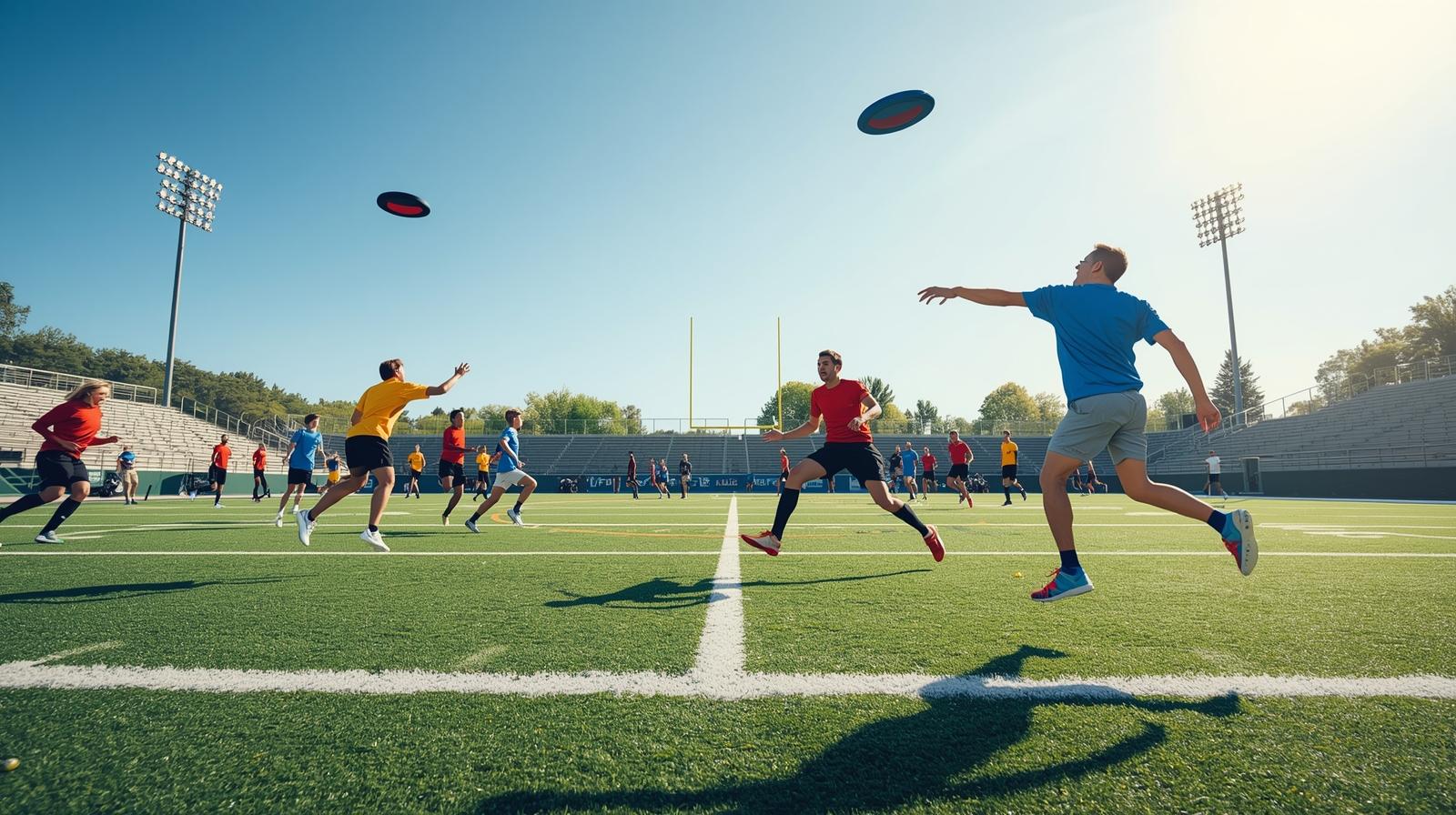
The foundation of ultimate frisbee rules centers on fair play and athleticism. Unlike traditional sports, there are no referees in standard play players call their own fouls and resolve disputes through discussion.
The Playing Field and Equipment
Ultimate frisbee rules specify a rectangular field measuring 70 yards by 40 yards, with 25-yard end zones on each side. The disc itself weighs 175 grams, the standard for competitive play worldwide.
Here’s what you need to start:
- A regulation 175-gram disc
- Two teams of seven players each
- Cones or markers for boundaries
- Athletic footwear with good traction
How Scoring Works
Points in ultimate frisbee are straightforward yet exciting. Your team scores when a player catches the disc in the opposing team’s end zone. Each successful catch equals one point, and games typically continue until one team reaches 15 points (though tournament formats vary).
The ultimate frisbee rules for scoring emphasize clean catches the receiver must maintain possession throughout ground contact and demonstrate clear control before the point counts.
Movement and Possession Rules
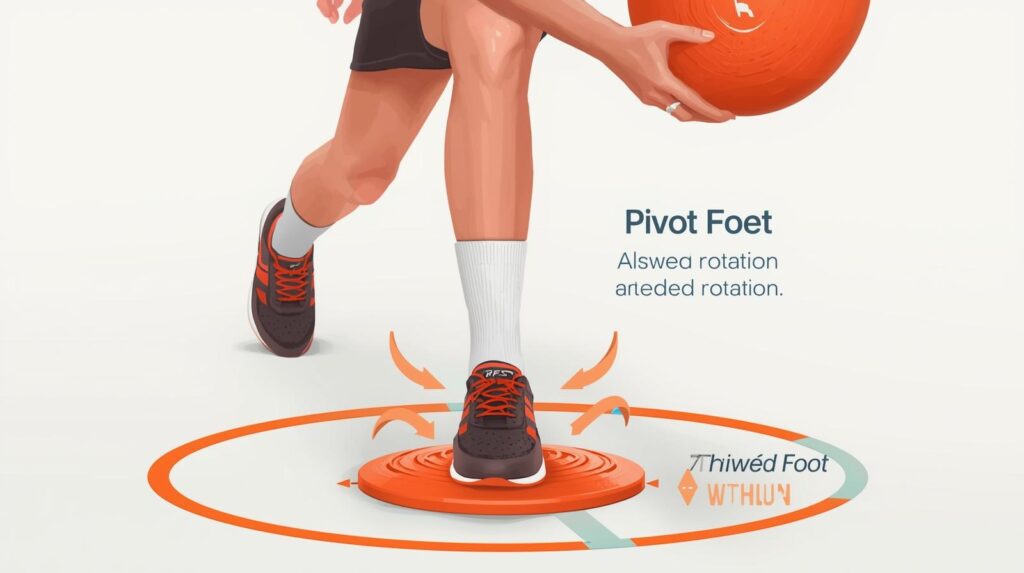
Once you catch the disc, ultimate frisbee rules require you to establish a pivot foot, similar to basketball. You cannot run with the disc; instead, you must stop and pivot while looking for open teammates.
The Stall Count Explained
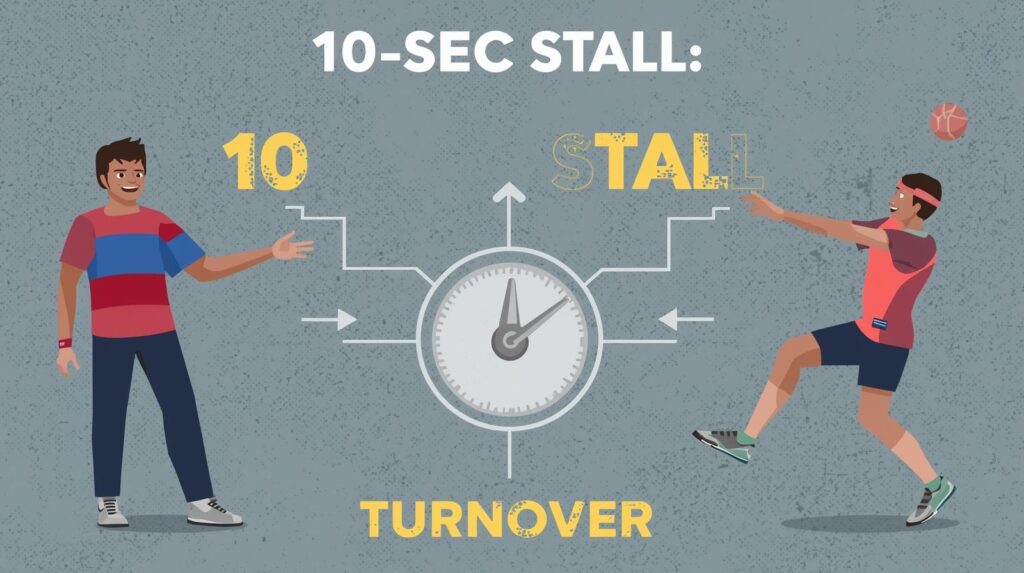
When you possess the disc, a defender can mark you by counting to ten out loud. This “stall count” prevents players from holding the disc indefinitely. If the marker reaches “ten” before you release, it’s a turnover.
I’ve learned the hard way that managing the stall count requires composure rushing throws under pressure leads to mistakes, but waiting too long means losing possession.
Turnovers and Possession Changes
Ultimate frisbee rules dictate that possession changes occur when:
- The disc hits the ground (incomplete pass)
- A defender intercepts the disc
- The disc travels out of bounds
- The stall count reaches ten
- An offensive player drops a catch
When turnovers happen, the defensive team immediately becomes the offense exactly where the disc landed or went out of bounds.
Self-Officiating and Spirit of the Game
The most distinctive aspect of ultimate frisbee rules is self-officiation. Players make their own foul calls, and the opposing team can agree or contest these calls. This system relies on the “Spirit of the Game” principle the assumption that no player will intentionally violate rules.
Common Fouls in Ultimate Frisbee
Understanding fouls is crucial for fair play:
| Foul Type | Description | Resolution |
|---|---|---|
| Contact | Physical contact that affects play | Play stops; discuss and resolve |
| Pick | Offensive player impedes defender | Defender can call “pick” |
| Travel | Moving with the disc improperly | Disc returns to violation spot |
| Strip | Defender knocks disc from thrower’s hand | Offensive team retains possession |
According to competitive statistics, dispute resolution in ultimate frisbee games takes an average of 30-45 seconds, remarkably efficient for a self-officiated sport.
Advanced Ultimate Frisbee Rules
Pull and Starting Play
Each point begins with a “pull” the defensive team throws the disc to the offensive team, similar to a kickoff in football. Ultimate frisbee rules require both teams to stand in their respective end zones until the pull is released.
The receiving team can let the disc land and take possession where it stops, or catch it mid-air and begin play immediately from that spot.
Substitutions and Timeouts
Teams can substitute players only:
- Between points
- After an injury
- During timeouts
Each team receives two timeouts per half, and ultimate frisbee rules allow only offensive players to call these stoppages. Timeouts last 70 seconds in competitive play.
Out of Bounds Situations
When the disc lands out of bounds, the ultimate frisbee rules state that play resumes from where the disc crossed the boundary line. If a receiver catches the disc while airborne but lands out of bounds, it’s a turnover their team does not retain possession.
Playing Strategies Within the Rules
Mastering ultimate frisbee rules opens strategic possibilities. The handler position requires exceptional throwing skills and field awareness, while cutters need speed and timing to exploit defensive gaps.
Zone Defense vs. Person-to-Person
While ultimate frisbee rules don’t dictate defensive strategies, teams commonly employ:
- Person-to-person defense: Each defender marks one offensive player
- Zone defense: Defenders cover specific field areas rather than individual players
Zone defenses exploit the stall count rule, forcing throws into heavily defended spaces and increasing turnover opportunities.
Competitive Play and Official Regulations
USA Ultimate and the World Flying Disc Federation maintain official ultimate frisbee rules for competitive tournaments. These organizations have standardized regulations across divisions including men’s, women’s, and mixed teams.
Tournament play often includes observers non-player officials who resolve disputed calls but don’t make proactive rulings. This preserves the self-officiated nature while adding accountability during high-stakes competition.
I’ve played in tournaments where observers made critical differences during finals, helping teams focus on playing rather than lengthy dispute resolution.
For more insights on competitive sports culture, check out Ninty2magazine for in-depth coverage.
Teaching Ultimate Frisbee Rules Effectively
Whether coaching youth leagues or introducing friends to the sport, presenting ultimate frisbee rules clearly ensures everyone enjoys the experience. Start with basic throwing mechanics before introducing complex rules about fouls and violations.
Key Teaching Points
Focus on these fundamentals first:
- The disc cannot touch the ground during possession
- You cannot run while holding the disc
- Call your own fouls honestly
- Respect opponents and maintain spirit
These core ultimate frisbee rules establish the foundation for everything else players will learn.
Common Misconceptions About Ultimate Frisbee Rules
Many newcomers misunderstand certain ultimate frisbee rules. Let me clarify the most frequent confusion points:
Myth: You can take steps after catching the disc. Reality: Ultimate frisbee rules require establishing a pivot foot immediately upon catching.
Myth: Defenders can knock the disc down during flight. Reality: Defenders can only intercept or block deliberately knocking down passes without attempting possession constitutes a violation.
Myth: The loudest player’s call wins disputes. Reality: Ultimate frisbee rules emphasize respectful discussion and honest assessment of what occurred.
The Evolution of Ultimate Frisbee Rules
Since the sport’s inception in 1968, ultimate frisbee rules have evolved significantly. Early versions lacked standardized field dimensions and used informal resolution methods for disputes. Today’s comprehensive rulebook reflects decades of refinement.
The introduction of observers in competitive play during the 1990s marked a significant evolution, balancing self-officiation with accountability. Modern ultimate frisbee rules now accommodate various formats including beach ultimate, indoor ultimate, and goaltimate variations.
Health and Safety Considerations
While ultimate frisbee rules don’t require protective equipment beyond cleats, player safety remains paramount. The non-contact nature protects participants from many injuries common in traditional sports, though collisions during layout attempts can occur.
According to injury tracking data, ultimate frisbee has a lower injury rate than soccer or basketball when normalized for playing time, partly because the rules explicitly prohibit intentional contact.
Conclusion: Embracing the Spirit Beyond the Rules
Understanding ultimate frisbee rules transforms you from a spectator into an active participant in one of the world’s most honorable sports. These regulations aren’t just guidelines they’re the framework supporting a community built on mutual respect and athletic excellence.
The beauty of ultimate frisbee rules lies not in their complexity but in their simplicity and trust. Every throw, every catch, every foul call reinforces the principle that competition and integrity coexist naturally.
Whether you’re playing pickup games at the park or competing in national tournaments, these rules create consistent, fair experiences. They’ve certainly enriched my life, connecting me with incredible athletes and teaching lessons about honesty that extend far beyond the field.
Frequently Asked Questions
How many players are on an ultimate frisbee team?
Ultimate frisbee rules specify seven players per team on the field during regulation play. Teams can have additional substitutes on the sideline, with unlimited roster sizes for recreational leagues and capped rosters for competitive tournaments.
Can you run with the frisbee in ultimate?
No, ultimate frisbee rules prohibit running while holding the disc. Players must establish a pivot foot upon catching and can only rotate around that fixed point until releasing a throw. Moving the pivot foot constitutes a travel violation.
What happens if two players catch the disc simultaneously?
When simultaneous catches occur, ultimate frisbee rules award possession to the offensive player. If both players are from the same team, they must determine between themselves who caught it first, following Spirit of the Game principles.
Are there referees in ultimate frisbee?
Standard ultimate frisbee rules rely on self-officiation without referees. Players call their own fouls and violations. However, competitive tournaments may use observers—officials who resolve disputed calls without making proactive rulings. Doesn’t this unique system make you wonder how other sports might benefit from similar trust-based approaches?