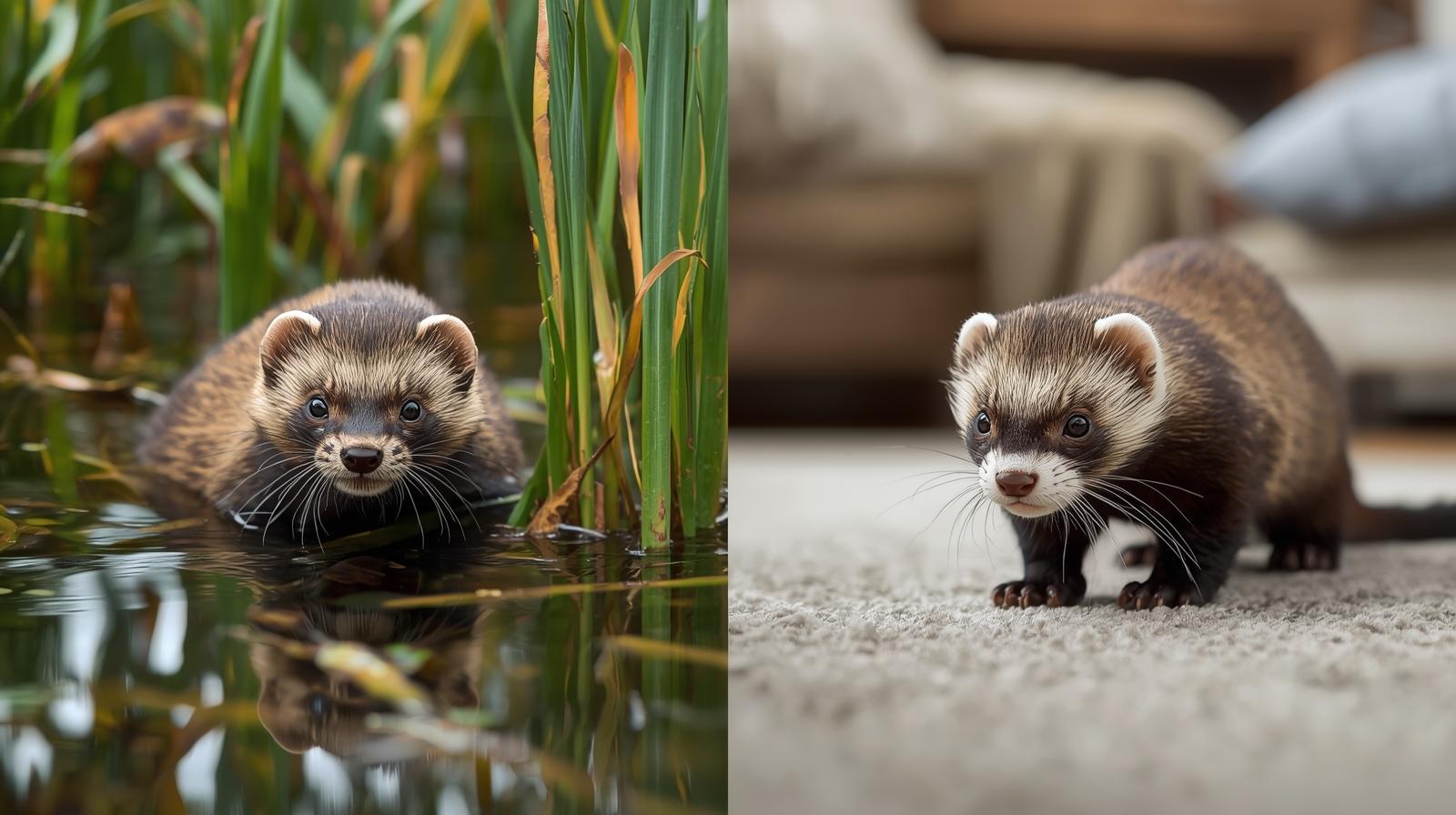
Choosing between a mink and ferret isn’t just about picking a cute, furry companion it’s about understanding two remarkably different animals that share a family tree but live vastly different lives. When my neighbor asked me about the mink vs ferret debate last summer, I realized how many people confuse these adorable mustelids. While they look similar at first glance, the differences between mink and ferret species run deeper than appearance.
According to the American Veterinary Medical Association‘s 2025 survey, approximately 334,000 U.S. households own ferrets, representing a 12% increase from the previous period. Meanwhile, minks remain primarily wild animals or farm-raised for fur production, with virtually no presence in domestic pet ownership statistics. This striking difference in domestication tells us everything we need to know about the mink or ferret decision for pet owners.
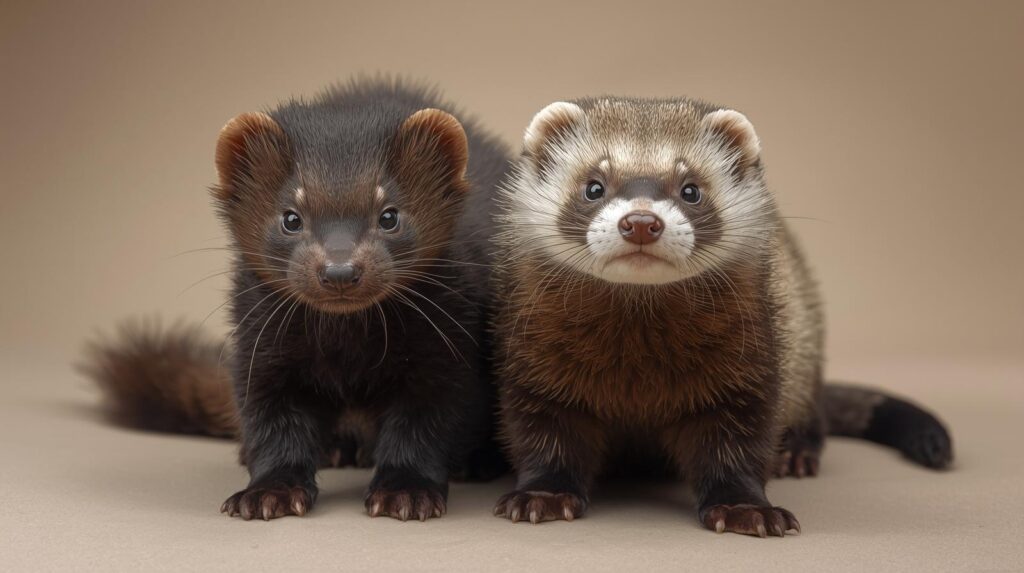
Table of Contents
Understanding the Mink and Ferret Family Connection
Both mink and ferret belong to the Mustelidae family, which includes weasels, badgers, otters, and wolverines. However, their evolutionary paths diverged significantly. Ferrets (Mustela furo) are domesticated descendants of European polecats, bred for companionship over 2,500 years. The American mink (Neogale vison), conversely, remains a wild, semi-aquatic predator despite centuries of fur farming.
This fundamental distinction shapes every aspect of the mink vs ferret comparison. While ferrets adapted to human households through selective breeding, minks retained their fierce, solitary nature. Even captive-raised minks display untamed behaviors that make them unsuitable for domestic life. For more insights about exotic pets and wildlife, visit Ninty2magazine.
Physical Differences Between Mink vs Ferret
Size and Weight Comparison
Understanding the physical variations helps distinguish between mink and ferret species:
| Feature | Ferret | Mink |
|---|---|---|
| Length | 18-20 inches | 12-23 inches (wild larger) |
| Weight | 1.5-4.5 pounds | 1-3 pounds (wild), up to 7 pounds (farmed) |
| Tail Length | Up to 5 inches | 5-10 inches |
| Body Type | Elongated with short legs | Sleek, streamlined |
| Fur Texture | Soft, fuzzy | Glossy, water-resistant |
When examining mink vs ferret dimensions, farm-raised minks often exceed wild specimens due to selective breeding focused on fur production rather than temperament. Domesticated ferrets, meanwhile, show more size variation based on genetics and diet.
Distinctive Physical Features
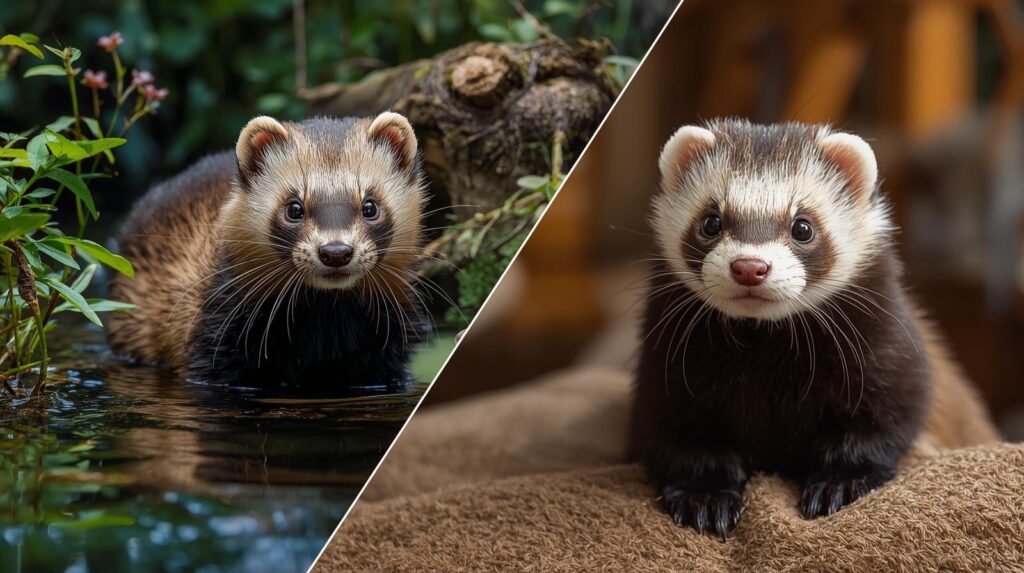
The mink or ferret identification becomes easier when you know their unique adaptations. Minks possess partially webbed feet designed for aquatic hunting, while ferrets have specialized scent glands producing a musky odor for territorial marking. Both species share sharp teeth and powerful jaws, but minks demonstrate greater bite force relative to their size.
Coat coloring provides another clue in the mink vs ferret debate. Ferrets display diverse colors including white, black, brown, grey, and various patterns. Minks typically showcase dark brown to black glossy fur with a distinctive white chin patch. This color limitation in minks results from breeding priorities focused on pelt quality rather than aesthetic variety.
Behavioral Traits: Mink vs Ferret Temperament
Social Behavior Patterns
The temperament difference represents the most critical factor in the mink and ferret comparison for potential pet owners. Ferrets are inherently social creatures that thrive on interaction with humans and other ferrets. They exhibit playful behaviors like the famous “weasel war dance” a joyful series of sideways hops and jumps accompanied by soft clucking sounds called “dooking.”
Minks, however, maintain solitary lifestyles except during mating season. They aggressively defend territories against other minks and rarely form social bonds. This antisocial tendency makes the mink vs ferret choice straightforward for anyone seeking a companion animal.
Activity Levels and Exercise Needs
According to research data, ferrets require at least 2 hours of daily exercise outside their enclosures. They’re crepuscular animals, most active during dawn and dusk, aligning well with typical human schedules. The mink or ferret exercise comparison reveals that minks need only 1 hour of daily activity but demand aquatic environments for natural behaviors.
Minks are nocturnal hunters with extraordinary swimming abilities, diving up to 16 feet deep to catch prey. This semi-aquatic lifestyle creates challenges for captive care that few individuals can accommodate. The mink vs ferret energy requirements differ significantly ferrets adapt to indoor play spaces, while minks require specialized pools and water features.
Habitat Requirements for Mink and Ferret
Natural Environments
Understanding natural habitats clarifies why the mink and ferret suitability as pets differs so dramatically. Ferrets are land-dwelling animals that historically occupied burrows and tunnels in grasslands, forests, and even deserts. They readily adapted to domestic environments, thriving in multi-level cages with regular supervised exploration time.
Minks inhabit semi-aquatic environments near rivers, streams, lakes, and marshlands. They construct dens along waterways, spending considerable time swimming and hunting aquatic prey. Their territory can span up to 2.5 miles of waterway, making captive recreation nearly impossible for average pet owners.
Captive Care Environments
For those still weighing the mink vs ferret housing question, ferrets require spacious cages (minimum 24x24x18 inches) with multiple levels, hammocks, and hiding spots. They adapt well to climate-controlled homes with temperatures between 60-80°F.
Minks demand exponentially more space and resources. Professional facilities provide large outdoor enclosures with both land and water areas, mimicking natural habitats. Many states require special permits for mink ownership due to their potential environmental impact if escaped. This legal complexity makes the mink or ferret decision heavily favor ferrets for private citizens.
Dietary Needs: Mink vs Ferret Nutrition
Protein Requirements
Both species are obligate carnivores requiring meat-based diets, but the mink and ferret nutritional specifics differ. Ferrets need 30-40% protein content with 15-20% fat in their diet. Modern commercial ferret foods meet these requirements, though some owners choose raw feeding with whole prey items like mice and rabbits.
Minks require even higher protein levels 35-40% protein with 15-20% fat and minimal carbohydrates. Wild minks consume fish, frogs, crayfish, small mammals, and waterfowl. Replicating this diet in captivity proves challenging and expensive compared to ferret nutrition.
Feeding Behaviors
Ferrets imprint on food preferences around six months of age, making early dietary diversity important. They eat smaller, frequent meals throughout the day and can be trained to eat from bowls on schedule. The mink vs ferret feeding comparison shows minks maintain stronger hunting instincts, preferring live or fresh-killed prey over processed foods.
Domestication History of Mink and Ferret
Ferret Domestication Timeline
The ferret domestication story spans millennia. Ancient Romans likely used ferrets for hunting rabbits a practice called rabbiting. Genetic analysis suggests ferrets descended from North African European polecat lineages approximately 2,500 years ago. By the 17th century, ferrets reached American continents, becoming popular for rodent control in grain stores.
The 1980s marked ferrets’ transition from working animals to beloved pets. By 1996, California’s government study estimated 800,000 domestic ferrets lived in the United States. Current data from the American Pet Products Association indicates over 5 million ferrets now reside in American homes, making them the third most popular pet in North America after dogs and cats.
Mink Breeding Practices
The mink vs ferret domestication comparison reveals a darker history for minks. Large-scale mink farming began in the 1920s, focused exclusively on fur production for the garment industry. Unlike ferrets, minks were never bred for temperament or companionship only fur color and quality mattered to farmers.
This selective breeding created minor genetic differences from wild minks but failed to produce domestic temperaments. When farm-raised minks escape, they quickly revert to wild behaviors, establishing feral populations that threaten native ecosystems. This fundamental difference in the mink and ferret breeding history explains why ferrets make suitable pets while minks do not.
Trainability: Mink vs Ferret Intelligence
Ferrets demonstrate remarkable intelligence and trainability thanks to thousands of years of domestication. They readily learn litter box habits, responding best to reward-based training systems. Many ferrets master simple tricks like coming when called, rolling over, or retrieving small objects. Their curious, playful nature makes training an engaging experience for both pet and owner.
The mink or ferret trainability comparison heavily favors ferrets. Minks retain strong hunting instincts and suspicious attitudes toward humans despite captive upbringing. Their intelligence manifests in problem-solving for hunting and escape rather than cooperation with trainers. Even experienced exotic animal handlers struggle to modify mink behavior through training.
Lifespan Considerations in Mink and Ferret Care
Expected Lifespans
When evaluating the mink vs ferret longevity, potential owners should understand commitment levels. Ferrets typically live 4-6 years in captivity with proper care, though some reach 8-10 years. Wild ferrets survive only 1-3 years due to predation and resource competition.
Minks show reversed patterns. Wild minks live 3-4 years facing similar survival pressures as wild ferrets. However, captive minks often reach 10 years with professional care meeting their complex needs. This mink and ferret lifespan data might seem to favor minks, but remember that appropriate captive mink care exceeds most private facilities’ capabilities.
Health Management
Ferret health care has become standardized through veterinary medicine. Common ferret health issues include adrenal disease, insulinoma, and hairballs all manageable with proper vet care costing approximately $200-300 annually. Regular vaccinations against rabies and distemper are essential.
The mink vs ferret health comparison shows limited veterinary knowledge about mink care due to their rarity as pets. Few vets outside exotic animal specialists treat minks, and medical research focuses on farmed populations rather than companion animals.
Legal Status: Mink or Ferret Regulations
Understanding legal restrictions clarifies the practical mink and ferret ownership landscape. Ferrets are legal in most U.S. states, with notable exceptions including California and Hawaii where they remain banned due to environmental concerns about feral populations. Some cities impose additional regulations requiring permits or prohibiting ownership altogether.
Mink ownership faces stricter regulation. Many jurisdictions require special exotic animal permits due to minks’ potential impact on native wildlife if escaped. Their semi-aquatic nature and aggressive territorial behavior toward local fauna make them ecological threats. This regulatory environment makes the mink vs ferret legal comparison straightforward for most prospective pet owners.
Cost Analysis: Mink vs Ferret Expenses
Initial Setup Costs
Starting with a ferret involves moderate expenses. Basic setup including a cage, bedding, food bowls, toys, and initial vet visit ranges from $300-500. Quality ferrets from reputable breeders cost $100-300, though adoption from rescue organizations offers lower-cost alternatives.
The mink or ferret cost comparison becomes extreme when considering mink requirements. Initial setup for appropriate mink housing with land and water features costs thousands of dollars. Purchasing a mink (where legal) ranges from $500-2,000, but few breeders sell to private individuals.
Ongoing Maintenance Expenses
Annual ferret care costs approximately $500-1,000, including food ($200-300), litter supplies ($100-150), veterinary care ($200-300), and miscellaneous items. These expenses align with other small pets, making ferrets financially accessible for most families.
Mink maintenance dramatically exceeds ferret costs. Specialized diets, elaborate habitat maintenance, and limited veterinary resources push annual expenses well beyond $2,000-3,000. This financial reality makes the mink vs ferret affordability question rhetorical for average pet owners.
Why Ferrets Win the Mink and Ferret Debate
After exploring every angle of the mink vs ferret comparison, the conclusion becomes clear: ferrets make excellent pets while minks do not. Ferrets offer playful companionship, manageable care requirements, and established veterinary support. They adapt to human schedules, enjoy social interaction, and thrive in typical household environments.
Minks belong in professional facilities like zoos where experts can provide appropriate semi-aquatic habitats and specialized care. Their wild nature, complex needs, and potential danger to both owners and local ecosystems make private ownership impractical and often illegal.
I’ve witnessed this distinction firsthand. My neighbor who asked about the mink or ferret question eventually adopted two ferrets named Bandit and Zoomer. They transformed her home with endless entertainment and affection. When she considered a mink, local wildlife authorities explained the permit requirements and recommended against private ownership advice that proved wise.
Making Your Decision: Mink vs Ferret
For anyone genuinely interested in the mink and ferret comparison as potential pets, the choice is straightforward. If you want a playful, trainable, social companion that adapts to home life, choose a ferret. Research local regulations, find reputable breeders or rescue organizations, and prepare appropriate housing before bringing your ferret home.
If you’re fascinated by minks, support conservation efforts for endangered species like the European mink, or visit accredited zoos and wildlife facilities where you can observe these magnificent animals in appropriate settings. Leave mink care to professionals who can meet their complex needs.
The mink vs ferret debate ultimately isn’t about which animal is “better” it’s about recognizing that domestication fundamentally changed ferrets into suitable companions while minks remain wild animals deserving of their natural habitats or professional care facilities.
Frequently Asked Questions About Mink vs Ferret
Can minks and ferrets live together?
No, minks and ferrets should never be housed together. Minks are aggressive, solitary animals that will attack ferrets despite their family relationship. Minks can inflict serious injuries due to their stronger bite force and wild temperament. Ferrets are social animals incompatible with minks’ territorial aggression.
Are ferrets related to minks?
Yes, ferrets and minks are related members of the Mustelidae family. However, they belong to different genera ferrets are Mustela furo while American minks are Neogale vison. They share a common ancestor but evolved along different paths, with ferrets becoming domesticated while minks remained wild.
Which is stronger, a mink or ferret?
Minks are stronger than ferrets pound-for-pound and can take down larger prey despite similar sizes. Minks possess more powerful jaws, sharper teeth, and aggressive hunting instincts refined by wild living. Ferrets, bred for companionship, lost much of their aggressive edge through domestication.
Do ferrets require less space than minks?
Yes, ferrets require significantly less space than minks. A ferret thrives in a multi-level cage of 24x24x18 inches minimum with daily exercise time. Minks need large outdoor enclosures with both terrestrial and aquatic zones spanning hundreds of square feet to accommodate their semi-aquatic lifestyle.
Why are ferrets legal but minks are restricted?
Ferrets are legal in most areas because thousands of years of domestication reduced their survival instincts and environmental impact. Minks retain wild behaviors and pose significant threats to native ecosystems if escaped, particularly to water vole populations. Their aggressive territorial nature and successful establishment of feral colonies in many regions led to stricter ownership regulations.
After reading this comprehensive mink vs ferret comparison, which animal do you think would better fit into your lifestyle and living situation?