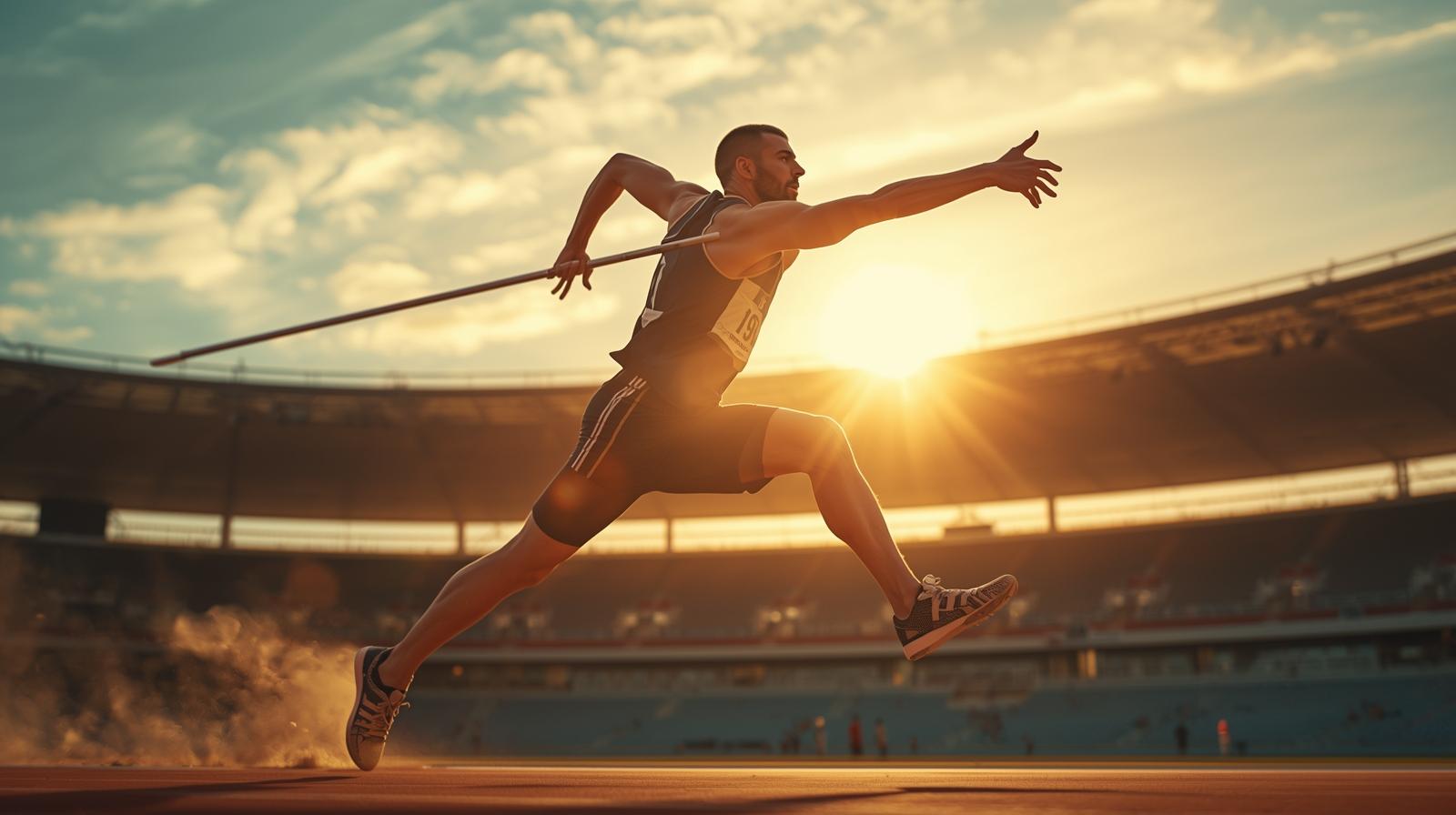
The javelin throw represents one of track and field’s most captivating events, blending raw power with technical precision. When I first watched a javelin competition, I was mesmerized by how athletes transform momentum into flight, launching a spear-like implement nearly 100 meters through the air. This ancient sport continues to evolve, with modern athletes pushing the boundaries of what seems physically possible.
The Ancient Origins of Javelin Throw
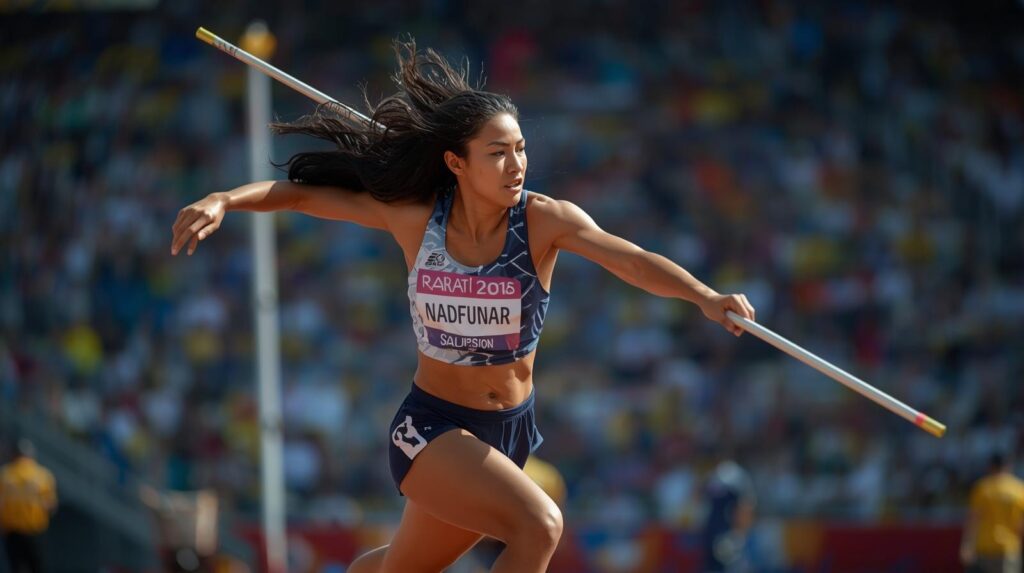
The roots of javelin throw stretch back to 708 BC when it became part of the Ancient Olympic Games in Greece. The sport was included in the pentathlon event alongside running, discus throw, long jump and wrestling, with the original javelin crafted from olive wood. Athletes in ancient times used a leather thong called an ankyle, wound around the shaft’s middle, which created a spiral trajectory when released.
Unlike modern competition, ancient Greeks competed in two events: one for distance and another for accuracy in hitting targets. This dual focus reflected the javelin’s practical origins as a hunting and warfare tool. The sport disappeared for centuries after Roman emperor Theodosius I banned pagan celebrations around 394 AD.
The modern revival began in Scandinavia during the late 1700s, with Finns and Swedes rekindling interest in the discipline. The javelin throw debuted at the modern Olympics in 1908, with women’s competition added in 1932 when American athlete Babe Didrikson claimed the inaugural gold medal.
Understanding Javelin Throw Biomechanics and Physics
The science behind a successful javelin throw is remarkably complex. Elite throwers release the javelin at speeds of 28-30 meters per second (100 km/h), though their maximum run-up speed only reaches 5-6 meters per second (20 km/h). This dramatic acceleration occurs during the final two steps, where the entire body acts as a kinetic chain.
The Optimal Release Parameters
The ideal release angle ranges between 32 and 36 degrees, which differs from the theoretical 45-degree angle due to aerodynamic properties and the athlete’s release height of approximately 2.1-2.3 meters. The angle of attack the difference between the javelin’s orientation and its flight path should ideally be zero degrees for maximum aerodynamic efficiency.
Research shows that release speed dominates performance outcomes. Run-up speed contributes up to 75% of the javelin’s kinetic energy, making it the dominant predictor of throwing distance. This explains why javelin throw training emphasizes sprint mechanics and explosive power development.
Energy Transfer and Joint Mechanics
The throwing motion begins with a firm front foot plant, creating a blocking action that stops forward momentum. As each joint reaches its range of motion limit and decelerates, the next joint in the kinetic chain hip, shoulder, elbow, and finally the javelin accelerates rapidly. This sequential activation produces the whip-like motion characteristic of elite throwers.
The demands on the body are intense. Athletes must develop extraordinary leg and ankle strength to handle the forces generated during the blocking phase, while their shoulder muscles experience significant stress during the delivery and recovery phases.
Breaking Down Javelin Throw Technique
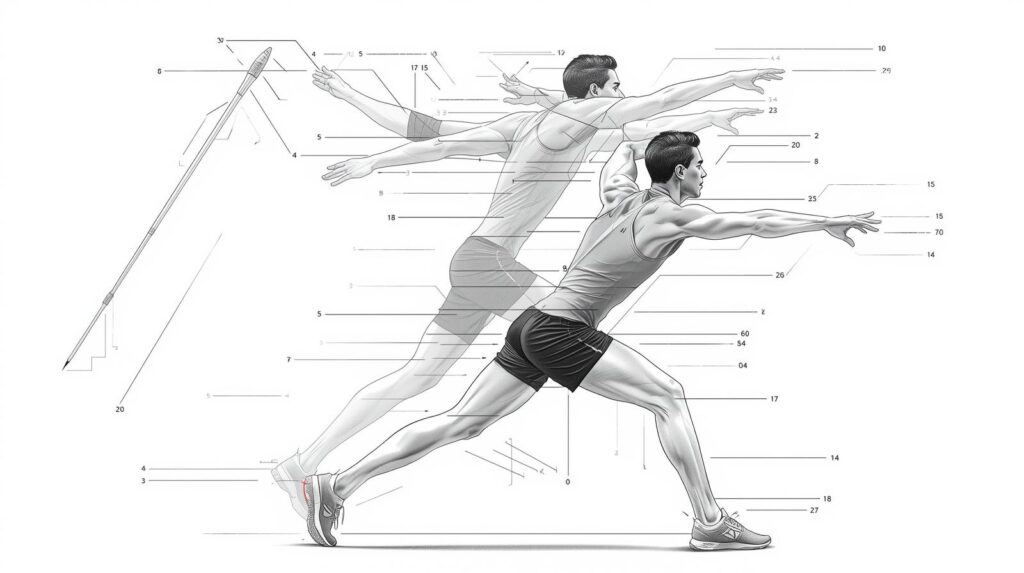
Mastering the javelin throw requires perfecting multiple technical phases, each contributing to the final result.
The Approach Run and Withdrawal Phase
The approach typically consists of 6-10 running steps, during which athletes build controlled velocity while maintaining upright posture. The javelin stays positioned above shoulder level throughout this phase. As the athlete transitions into crossover steps, the javelin is drawn back while the torso rotates, creating a pre-loaded position that stores elastic energy in the core muscles.
Crossover Steps and the Impulse Phase
The crossover steps are crucial for maintaining momentum while establishing proper throwing position. The second-last crossover step, known as the impulse step, is slightly exaggerated, allowing the thrower to land with weight over their back foot, similar to a cricket fast bowler’s delivery stride. This positions the body for the explosive block phase.
The Block and Release
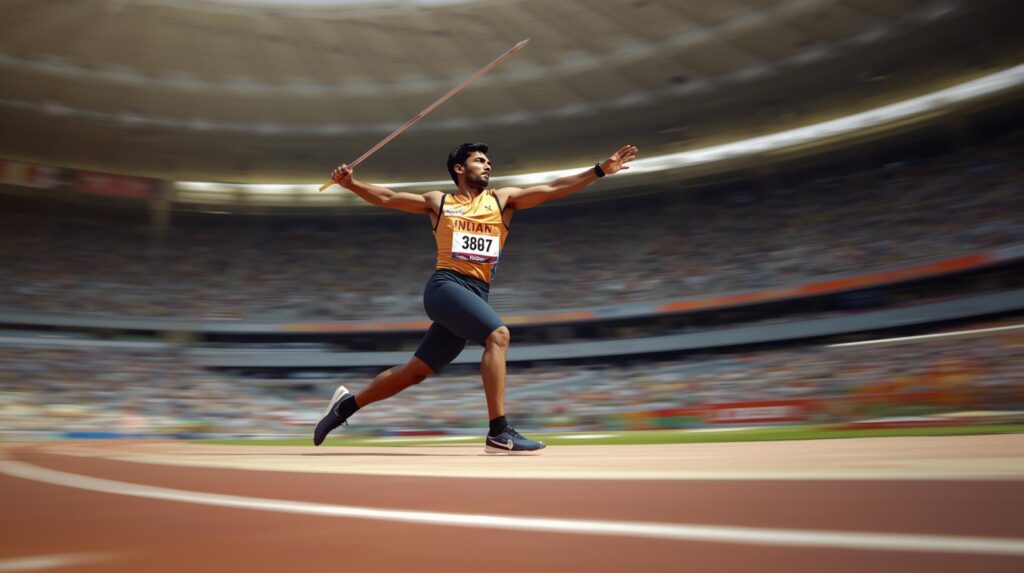
The blocking leg plants forcefully, converting horizontal momentum into rotational power. The upper body whips forward as the arm extends rapidly, releasing the javelin at shoulder height. The wrist snap and finger action at release provide the final acceleration, with elite athletes achieving remarkable consistency in this critical moment.
World Records and Olympic Excellence
Men’s Javelin Throw World Record
Czech legend Jan Železný holds the men’s world record at 98.48 meters, set in Jena, Germany in June 1996. This nearly 30-year-old record remains one of athletics’ most enduring marks. Železný dominated the 1990s, winning three consecutive Olympic gold medals (1992, 1996, 2000) and three world championships.
The javelin specification changed in 1986 after concerns arose about throws exceeding stadium dimensions, with the center of gravity shifted forward to reduce distances. Before this modification, East Germany’s Uwe Hohn achieved the only recorded 100-meter-plus throw in history with 104.80 meters in 1984.
Women’s Javelin Throw World Record
Barbora Špotáková of the Czech Republic holds the women’s world record at 72.28 meters, achieved in Stuttgart, Germany in September 2008. Only a handful of female athletes have surpassed the 70-meter barrier with the current javelin specification.
Recent Olympic Achievements
The 2024 Paris Olympics witnessed a historic performance. Pakistan’s Arshad Nadeem shattered the Olympic record with a throw of 92.97 meters, becoming the first Pakistani to win an individual Olympic gold medal in athletics. His second-round throw stunned the field, placing him sixth on the all-time list.
India’s Neeraj Chopra, the defending champion from Tokyo 2020, secured silver with a season-best 89.45 meters, making him the first Indian athlete to win both gold and silver in individual Olympic events. Grenada’s Anderson Peters earned bronze with 88.54 meters.
| Athlete | Country | Distance | Year | Event |
|---|---|---|---|---|
| Jan Železný | Czech Republic | 98.48m | 1996 | World Record |
| Barbora Špotáková | Czech Republic | 72.28m | 2008 | World Record (Women) |
| Arshad Nadeem | Pakistan | 92.97m | 2024 | Olympic Record |
| Neeraj Chopra | India | 90.23m | 2025 | Personal Best |
How to Javelin Throw: Essential Training Methods
Strength and Conditioning Programs
Javelin throwers must train as speed-power athletes, similar to sprinters and jumpers. The training emphasis falls heavily on explosive qualities rather than maximum strength. Core stability exercises build the foundation for energy transfer through the kinetic chain, while plyometric drills develop the reactive strength needed for the blocking phase.
Elite programs incorporate medicine ball exercises that mimic throwing mechanics without the shoulder stress of actual javelin work. Olympic bronze medalist Ariana Ince builds her throwing arms using just three exercises with medicine balls and a wall, progressively increasing repetitions to hundreds over time.
Technical Drills for Skill Development
Proper technique development begins with grip fundamentals. Athletes commonly use three grip styles: the Finnish, fork, and American grips. Each places fingers differently on the cord binding, affecting control and release characteristics.
Standing throws form the cornerstone of technical training, potentially comprising up to half of practice time. Progressive drills include:
- Walking throws for rhythm development
- One-step power position throws for blocking mechanics
- Three-step throws combining approach and delivery
- Full approach throws integrating all technical elements
Sprint training remains essential, as proper running mechanics with the javelin distinguish elite performers. Athletes must maintain relaxed upper body carriage while executing technically sound sprint form.
Injury Prevention Strategies
The javelin throw places unique demands on the shoulder, elbow, and back, making injury prevention paramount. Athletes cannot simply increase throwing volume like shot putters or discus throwers. Daily throw counts typically remain under 30 to prevent overuse injuries.
Prehabilitation exercises strengthen rotator cuff muscles and scapular stabilizers. Flexibility work targeting shoulders, hips, hamstrings, and thoracic spine maintains the range of motion required for optimal technique. Dynamic stretching, mobility drills, and foam rolling should feature prominently in warm-up and cool-down routines.
The Global Landscape of Javelin Throw Sports
Javelin throw competition thrives across continents, with traditional powerhouses in Europe facing new challengers from Asia. A total of 26 athletes have surpassed the 90-meter mark in men’s javelin history, with Pakistan’s Arshad Nadeem ranking sixth all-time and India’s Neeraj Chopra placing 24th.
Scandinavian nations historically dominated the event, with 32 of 69 Olympic medals awarded to competitors from Norway, Sweden, or Finland. Finland uniquely swept all medals twice in recognized Olympics (1920 and 1932). However, recent years have seen the competitive landscape broaden significantly.
The Ninty2magazine recently highlighted how Asian athletes are reshaping javelin throw expectations, with multiple competitors now regularly exceeding 85 meters. This globalization of excellence reflects improved coaching, better training facilities, and increased youth development programs worldwide.
Advanced Performance Optimization
Mental Training and Competition Psychology
Beyond physical preparation, mental fortitude separates good throwers from champions. Visualization techniques help athletes rehearse perfect throws mentally, establishing neural pathways that enhance actual performance. Positive self-talk and mindfulness meditation develop the focus required for high-pressure competition.
Elite athletes like Železný and Nadeem display remarkable composure under pressure. Nadeem entered the 2024 Olympics with just one competition under his belt but delivered when it mattered most, demonstrating the importance of mental preparation alongside physical readiness.
Nutrition and Recovery Protocols
Optimal nutrition supports the rigorous training demands placed on javelin athletes. A balanced diet providing adequate energy, macronutrients, and micronutrients fuels training sessions while supporting recovery. Protein intake becomes particularly important for muscle repair and adaptation.
Recovery strategies extend beyond nutrition. Sleep quality, active recovery sessions, massage therapy, and strategic rest periods all contribute to sustainable performance improvement. Athletes must balance training stress with adequate recovery to avoid overtraining syndrome.
The Future of Javelin Throw
Technological advances continue reshaping Sports training methodology. Video analysis software allows frame-by-frame technique dissection, identifying subtle inefficiencies invisible to the naked eye. Wearable sensors provide real-time biomechanical feedback during training sessions.
Research into energy flow analysis, previously applied to baseball pitching, now informs javelin training programs. Scientists can quantify how efficiently athletes transfer energy through the kinetic chain, identifying specific technical modifications to reduce joint stress while maintaining performance.
The javelin itself may not change soon, but our understanding of optimal throwing mechanics continues evolving. Computer simulations test countless technique variations, identifying theoretical performance ceilings. As training methodologies improve, athletes edge closer to these theoretical limits.
For aspiring throwers, the pathway to excellence remains clear: master fundamental technique, develop explosive power, maintain consistent training while preventing injury, and cultivate the mental resilience required for championship performance. The javelin throw rewards those who respect its complexity while pursuing relentless improvement.
Frequently Asked Questions About Javelin Throw
Q: What is the world record in javelin throw?
The men’s world record stands at 98.48 meters, held by Jan Železný of the Czech Republic since 1996. For women, Barbora Špotáková holds the record at 72.28 meters, set in 2008. These marks have proven incredibly durable, testament to the athletes’ exceptional performances.
Q: How do javelin throw Olympics qualifications work?
Olympic qualification requires either achieving the entry standard (typically around 85.50 meters for men) during the qualification period or ranking high enough in World Athletics rankings. A maximum of three athletes per nation can qualify, ensuring global representation while maintaining competitive standards.
Q: What makes javelin throw technique so difficult to master?
The javelin throw demands perfect coordination of multiple joints moving in different planes simultaneously. Athletes must combine sprinter’s speed with explosive power while maintaining precise technical control. The timing window for optimal release is measured in milliseconds, and small technique errors significantly impact distance.
Q: Can anyone learn how to javelin throw safely?
Yes, with proper instruction and progressive training. Beginners should start with lighter implements like TurboJavs or training javelins, focusing on fundamental grip and throwing mechanics. Building adequate shoulder and core strength before advancing to full-weight implements reduces injury risk substantially.
Q: Why did they change the javelin design in 1986?
The modification shifted the javelin’s center of gravity forward after elite throwers consistently exceeded safe stadium distances, with some throws approaching 105 meters. The change reduced throwing distances by approximately 10% while maintaining the event’s technical challenges. Women’s javelins underwent similar modification in 1999 for comparable safety reasons.
Do you think mastering the javelin throw requires more athletic talent or technical precision, and which aspect do you find most fascinating about this ancient yet constantly evolving Olympic discipline?