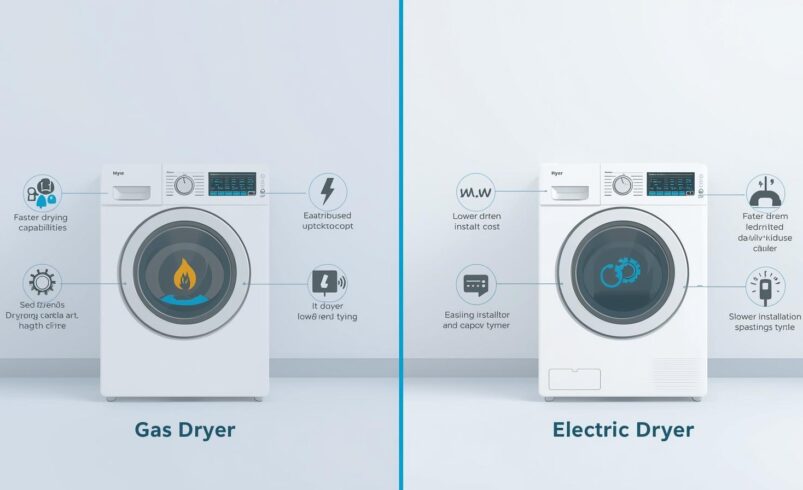
When I moved into my first home three years ago, I found myself standing in the empty laundry room facing a surprisingly tricky decision: should I install a gas dryer or go with electric? What seemed like a simple choice quickly turned into a deep dive into costs, efficiency, and home setup.
The gas dryer vs electric dryer debate isn’t just about personal preference. It’s about understanding your home’s infrastructure, weighing long-term energy costs, and making a decision that could impact your budget for years. Here’s everything I learned from my research and experience.
Table of Contents
Understanding How Each Dryer Type Works
Before comparing gas dryer vs electric dryer performance, you need to understand the fundamental differences in how these machines operate. The gas vs electric dryer debate starts with understanding their basic mechanics.
Electric Dryer Mechanics
Electric dryers power everything through electricity. They use metal heating coils that convert electrical energy into heat, requiring a 240-volt outlet that hefty plug with three or four prongs you’ve probably noticed. The heating element warms the air, which a fan circulates through the drum as your clothes tumble.
Electric dryers currently dominate the market, accounting for 73 percent of machines owned by consumers. This popularity stems partly from their simpler installation requirements and widespread availability.
Gas Dryer Operation
Gas dryers operate differently from electric models. They burn natural gas or propane to generate heat, using electricity only to power the drum, fan, lights, and controls. This reduced electrical demand means they can often plug into a standard 120-volt outlet. However, a gas supply line and an exterior vent are required to safely expel combustion gases.
Electric dryers dominate the market, holding an 81% share according to recent research. While gas dryers are less common, they remain a strong option for households seeking faster drying times and lower long-term energy costs.
The True Cost Breakdown: Initial Investment vs Operating Expenses
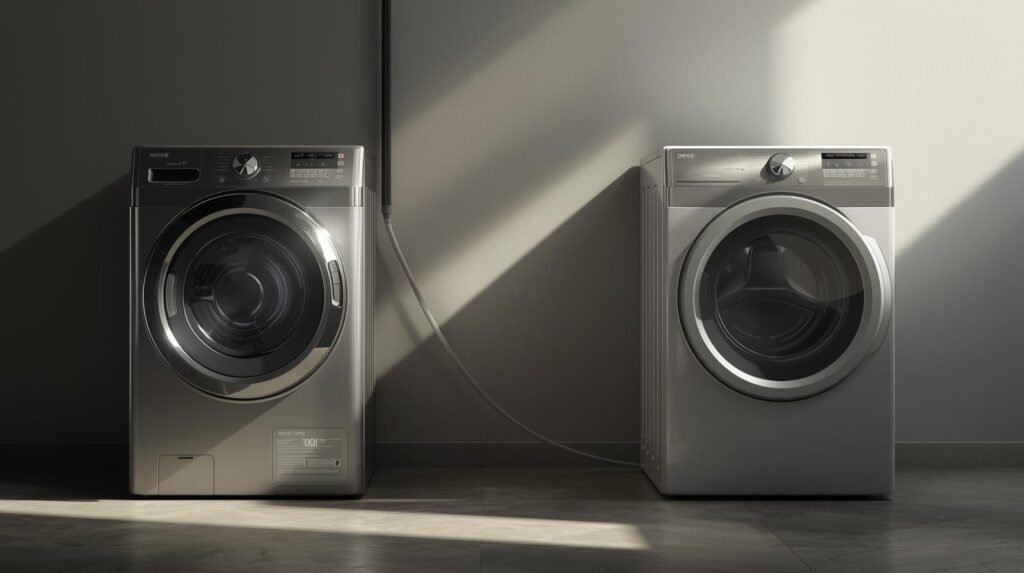
This is where the gas dryer vs electric dryer comparison gets interesting. I’ll break down both upfront and long-term costs because they tell very different stories.
Purchase Price Comparison
| Dryer Type | Average Cost Range | Installation Requirements |
|---|---|---|
| Electric Dryer | $800 – $1,200 | 240V outlet (standard in most homes) |
| Gas Dryer | $890 – $1,300 | 120V outlet + gas line + venting |
| Installation Labor | $100 – $300 | Electric: Quick hookup |
| Gas Line Installation Cost | $400 – $1,000 | Only if no existing gas line |
Gas dryers typically cost $90 to $100 more than comparable electric models. But that’s just the beginning.
Installing a gas line costs between $400 and $1,000, with an additional $125 to $250 to hook up the gas dryer. If your home lacks gas infrastructure, you’re looking at a significant upfront investment.
Annual Operating Costs: The Real Difference
Here’s where the gas dryer vs electric dryer comparison reveals significant savings potential. The most energy-efficient electric dryer costs about $120-130 per year to operate, while a similar gas dryer would cost about $85.
Let me put that in perspective with real numbers:
Electric Dryer Annual Costs:
- Energy consumption: 1.8-5.5 kWh per load
- Cost per load: $0.20-$1.10
- Annual cost (3 loads/week): $120-130
Gas Dryer Annual Costs:
- Gas consumption: 20,000-25,000 BTUs per hour
- Electricity for drum: 1.5 kWh
- Cost per load: $0.30-$0.95
- Annual cost (3 loads/week): $85
The annual savings of $35-45 means it would take 8-15 years to recoup the additional installation costs if you’re adding a gas line from scratch.
Energy Efficiency: Beyond the Monthly Bill
When comparing gas dryer vs electric dryer efficiency, we’re not just talking about your utility bill we’re discussing environmental impact and drying performance.
Energy Consumption Analysis
Most electric dryers use between 1.8 to 5 kWh of energy per hour depending on the model and settings. Gas dryers heat more quickly because the burner produces immediate heat, while electric heating elements need time to warm up.
From my personal experience, my electric dryer takes about 60 minutes for a full load of towels, while my parents’ gas dryer finishes the same load in 45-50 minutes. That time difference adds up when you’re doing multiple loads.
Environmental Considerations
The environmental story isn’t straightforward. Most US utilities now provide electricity that’s between 20% and 70% carbon-free, with an average of 40%. This means electric dryers can actually be cleaner depending on your local energy grid.
Natural gas burns cleaner than coal, but it still produces emissions. However, if your electricity comes primarily from renewable sources like Technology innovations in solar or wind power, an electric dryer might be the more environmentally friendly choice.
Installation Requirements and Home Compatibility
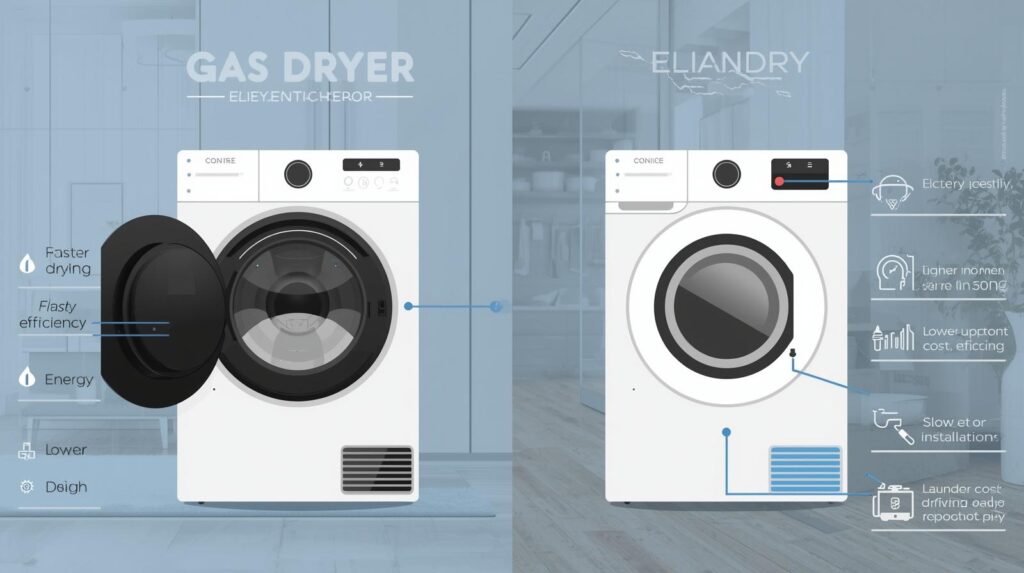
This factor often makes the decision for you before you even compare other features.
Electric Dryer Installation
Homes built after 1996 must have at least one four-prong dryer outlet with a 240-volt circuit. Installation is straightforward:
- Check outlet compatibility (3-prong or 4-prong)
- Position dryer near outlet
- Connect vent to exterior
- Plug in and test
Most homeowners can complete this in under an hour, though professional installation ensures proper venting.
Gas Dryer Installation Challenges
In some parts of the US, less than a third of homes have gas hook-ups. Before choosing a gas dryer, verify:
- Existing gas line in laundry area
- Proper exterior venting capability
- 120-volt outlet availability
- Local building codes and permits
Professional installation is mandatory for gas dryers due to safety concerns with gas line connections.
Regional Considerations That Impact Your Choice
The gas dryer vs electric dryer debate has geographical nuances worth understanding. Your location significantly influences which option makes more financial sense.
Gas dryer market share varies significantly: 21 percent in the Northeast, 25 percent in the Midwest, 21 percent in the South, and 33 percent in the West. Why such variation in the gas vs electric dryer preference?
High Electricity Rate States: States like Alaska, California, Hawaii, Maine, and Rhode Island see higher gas dryer adoption because their electricity rates make gas operation more economical. In these regions, the annual savings can reach $50-70.
Natural Gas Infrastructure: The South shows lower gas dryer adoption partly due to less prevalent natural gas infrastructure. Installation costs in these areas can be prohibitively expensive.
Performance Features Worth Considering
Beyond cost, daily performance matters in the gas dryer vs electric dryer decision. Here’s what I’ve observed comparing both types:
Drying Speed
Gas dryers typically complete cycles 5-15 minutes faster than electric models due to their rapid heating capability.
Moisture Sensing
Modern dryers of both types include moisture sensors. LG dominates quality ratings for both gas and electric dryers, thanks to stellar reliability ratings and impressive owner satisfaction scores.
Maintenance Requirements
Electric dryers generally require less maintenance no gas line inspections, no igniter cleaning, and fewer safety checks. Gas dryers need annual professional inspections to ensure safe operation.
Making the Right Choice for Your Situation
After three years with my electric dryer and extensive research, I’ve developed a decision framework for the gas dryer vs electric dryer choice.
Choose an Electric Dryer If:
- Your home lacks gas infrastructure
- You’re looking for lower upfront costs
- You prefer simpler maintenance
- Your electricity rates are reasonable
- You’re in a rental property
Choose a Gas Dryer If:
- You have existing gas lines
- Your electricity rates are high
- You do 5+ loads weekly
- You prioritize faster drying times
- Long-term savings matter more than upfront costs
The Verdict: What I’d Do Differently
Looking back at my decision, I chose the electric dryer primarily because installing gas lines would have cost $800. Given my current electricity rates and usage pattern (about 3 loads weekly), I’ll spend approximately $120 annually on operation.
If I had existing gas infrastructure, I would have chosen gas. The annual $35-45 savings would have paid for itself within 2-3 years, and the faster drying times would have been genuinely convenient during busy weeks.
The key insight? Neither option is universally better. Check out Ninty2magazine for more home appliance comparisons that help you make informed decisions.
Frequently Asked Questions
How much can I actually save with a gas dryer annually?
Based on current utility rates, gas dryers typically save $35–$45 per year compared to electric dryers. However, this depends on your location areas with high electricity rates may save up to $70 annually, while places where natural gas is expensive may see very little savings.
Can I convert my electric dryer to gas or vice versa?
Converting from one dryer type to another is not recommended. Although it’s technically possible, the conversion cost is high due to new parts, labor, and safety adjustments. Most manufacturers also void the warranty if you attempt a conversion, and it may create safety risks.
Do gas dryers dry clothes faster than electric dryers?
Yes, gas dryers are faster. They generate heat instantly using a gas burner, while electric dryers need extra time to heat their coils. On average:
- Gas dryer cycle time: 45–50 minutes
- Electric dryer cycle time: 55–65 minutes
Which type is more environmentally friendly?
It depends on your energy source. If your home uses clean electricity like solar, wind, or nuclear, then an electric dryer is more eco-friendly. But if your electricity comes mainly from coal or fossil fuels, then a gas dryer produces fewer carbon emissions overall.
Are modern gas dryers safe to operate?
Yes, modern gas dryers are safe when installed correctly by a professional. They include safety features like automatic shutoff systems and thermal protection. However, they do require proper ventilation and annual inspections to prevent gas leaks something electric dryers don’t require.
So, which dryer makes more sense for your home gas or electric, and what factors influenced your final decision?