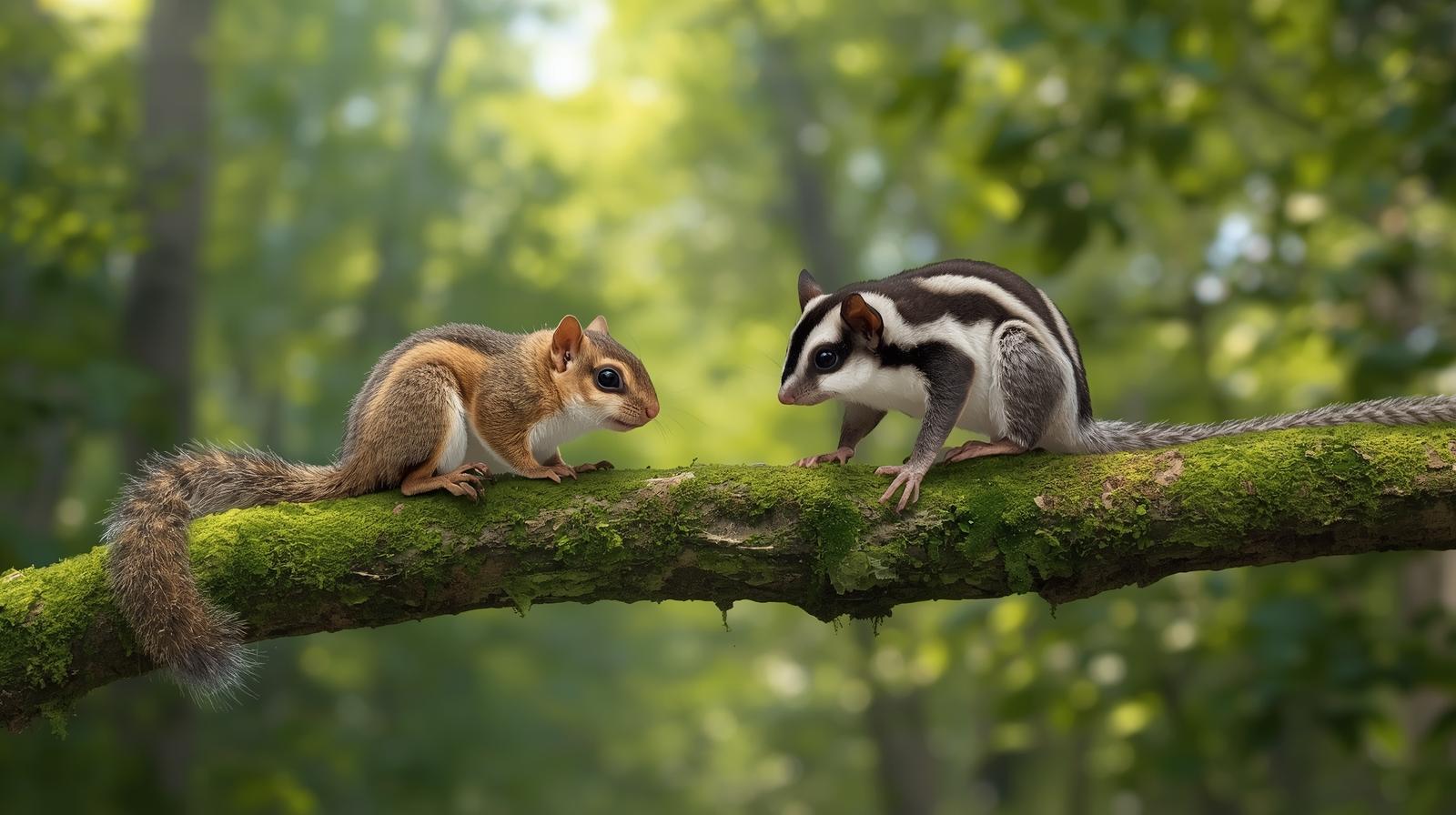
Have you ever watched a tiny creature glide gracefully through the night sky and wondered what makes these aerial acrobats so special? I’ll never forget the first time I saw what I thought was a flying squirrel in my backyard until I learned it might have been something entirely different. This moment sparked my fascination with understanding the flying squirrel vs sugar glider debate that confuses so many animal enthusiasts.
What Makes Flying Squirrels and Sugar Gliders Similar?
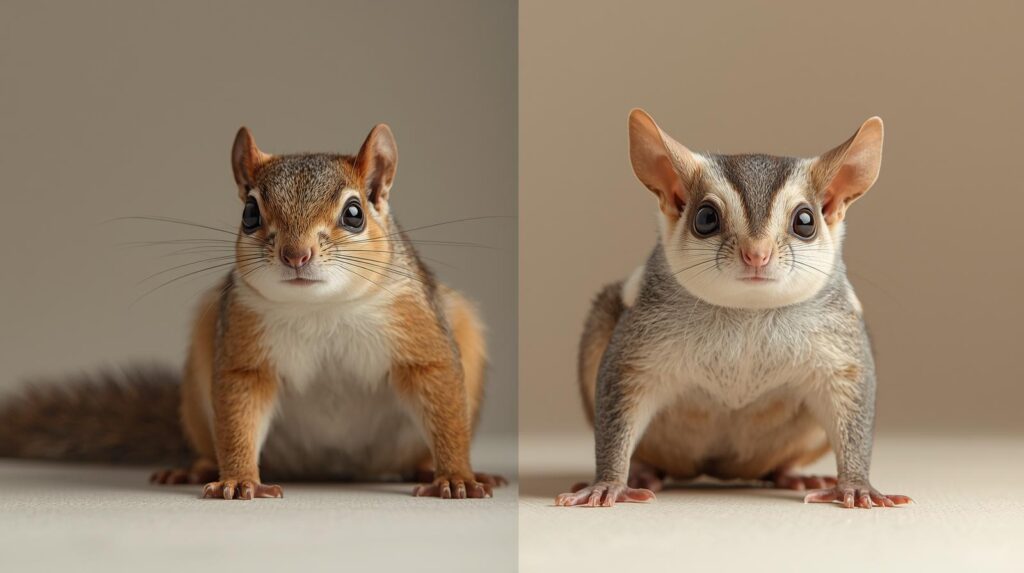
At first glance, the flying squirrel and sugar glider appear remarkably alike. Both creatures possess the extraordinary ability to glide through the air using a thin membrane of skin called a patagium, which stretches from their wrists to their ankles. These nocturnal mammals have developed large, expressive eyes that help them navigate the darkness, making them both adorable and efficient nighttime hunters.
The similarities in flying squirrel vs sugar glider comparisons extend beyond appearance. Both species are arboreal, meaning they spend most of their lives in trees, and both have adapted to similar ecological niches despite evolving on completely different continents. This phenomenon, known as convergent evolution, makes the flying squirrel or sugar glider distinction particularly fascinating for wildlife researchers.
Flying Squirrel vs Sugar Glider: Understanding the Family Tree
The most fundamental difference between flying squirrel and sugar glider species lies in their evolutionary backgrounds. Flying squirrels belong to the Sciuridae family, making them rodents closely related to tree squirrels and chipmunks. According to research from Berkeley, these placental mammals spend considerable time developing inside their mother’s body before birth.
Sugar gliders, conversely, are marsupials belonging to the Petauridae family, making them more closely related to kangaroos and koalas than to any squirrel. Female sugar gliders possess a distinctive pouch where their underdeveloped young complete their growth after a remarkably short 16-day gestation period. This fundamental biological difference makes the flying squirrel vs sugar glider comparison even more intriguing.
Geographic Distribution and Habitat Preferences
Flying Squirrel Territory
When examining flying squirrel vs sugar glider habitats, geographic location reveals striking differences. Flying squirrels inhabit Europe, Asia, North America, and Central America, with approximately 50 species distributed worldwide. In North America, the northern flying squirrel and southern flying squirrel are the most common species, favoring deciduous and mixed forests.
These rodents have adapted to survive in remarkably cold climates, with some species remaining active even at temperatures reaching 50 degrees below zero. Their preference for cooler environments distinguishes them significantly in the flying squirrel or sugar glider comparison.
Sugar Glider Range
Sugar gliders claim a completely different corner of the world. Native to Australia, Indonesia, Papua New Guinea, and surrounding islands, these marsupials thrive in warmer, more humid environments. They show particular preference for forests with dense tree canopy coverage, especially those featuring Acacia and Eucalyptus trees.
The strict geographic separation between flying squirrel and sugar glider populations means these species never naturally encounter each other in the wild, despite their superficial similarities.
Physical Characteristics: A Detailed Comparison
| Feature | Flying Squirrel | Sugar Glider |
|---|---|---|
| Weight | 2-5 ounces (up to 9.46 lbs for giant species) | 3-6 ounces |
| Body Length | 8-12 inches | 5-12 inches |
| Tail Length | 3-5 inches | 6-9 inches |
| Tail Type | Bushy and flattened | Rounded and less bushy |
| Fur Color | Greyish-brown with white underbelly | Grey/brown with dark dorsal stripe |
| Special Features | Extra wrist digit for patagium control | Opposable toe, marsupial pouch |
| Gliding Distance | Up to 300 feet | Shorter distances |
| Gliding Speed | 20-30 mph | Slower than flying squirrels |
Gliding Mechanics: Who’s the Better Flyer?
The flying squirrel vs sugar glider debate becomes particularly interesting when examining aerial capabilities. Flying squirrels demonstrate superior gliding efficiency, generating more lift and less drag compared to their marsupial counterparts. Research shows flying squirrels can reach impressive speeds of 20 to 30 mph and glide distances up to 300 feet, though typical flights cover around 150 feet.
The secret to flying squirrel superiority lies in their anatomy. They possess an extra digit protruding from their wrist that helps stretch the patagium surface, reducing drag significantly. Additionally, a small flap at the end of their patagium provides enhanced stabilization during flight. Flying squirrels expertly manipulate their limb and wing positions to execute precise turns mid-glide.
Sugar gliders, while capable gliders, cannot match this efficiency. Their patagium lacks the specialized features found in flying squirrels, resulting in shorter glide distances and less maneuverability. However, their gliding ability remains impressive for their size and serves them perfectly in their native Australian forests.
Dietary Differences Between Species
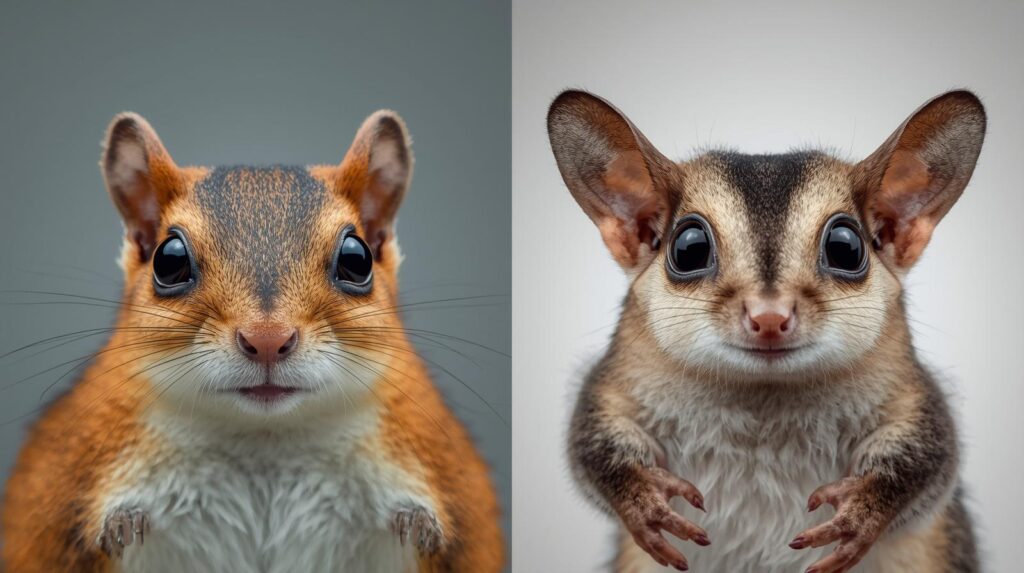
Understanding flying squirrel vs sugar glider nutrition reveals another crucial distinction. Flying squirrels are primarily herbivorous, consuming nuts, seeds, fruits, fungi, and occasionally insects or bird eggs. Their rodent ancestry gives them continuously growing teeth adapted for gnawing hard materials.
Sugar gliders follow an omnivorous diet that’s considerably more complex. In nature, they feast on sweet eucalyptus sap, pollen, nectar, insects, arachnids, and small vertebrates. As Ninty2magazine reports, their name derives from their preference for sweet foods, particularly honey and tree sap. This specialized diet makes sugar gliders more challenging to care for in captivity, requiring careful nutritional supplementation including calcium to prevent serious health issues.
Reproduction and Life Cycle
The flying squirrel vs sugar glider reproductive strategies differ dramatically. Flying squirrels, as placental mammals, carry their young for longer gestation periods, giving birth to more developed babies that don’t require pouch care. Litter sizes typically range from 2-4 pups, born with eyes closed and minimal fur.
Sugar gliders follow the marsupial reproductive pattern. After their brief 16-day gestation, tiny, underdeveloped joeys crawl into their mother’s pouch where they attach to a nipple and continue developing for approximately 70 days. This fundamental difference in reproduction strategy represents one of the most significant distinctions in the flying squirrel and sugar glider comparison.
Social Behavior and Temperament
Flying squirrels exhibit less complex social structures compared to sugar gliders. They may live alone or in small family units, especially during breeding season. While they can bond with humans as pets, they don’t require constant social interaction with their own species.
Sugar gliders, however, are highly social creatures that thrive in colonies of seven or more individuals in the wild. Each colony has a dominant male who scent-marks all family members, creating a united group that fiercely defends their territory. Pet sugar gliders require companionship and should ideally be kept in groups isolation can lead to depression and self-mutilation behaviors. This represents a critical consideration in the flying squirrel or sugar glider pet ownership decision.
As Pets: Flying Squirrel vs Sugar Glider Care Requirements
Flying Squirrel Pet Considerations
Experienced owners who’ve kept both species often recommend flying squirrels for most people. Southern flying squirrels have simpler dietary requirements and lack the strong scent glands found in sugar gliders. They’re generally cleaner pets, as they can hold their bathroom needs for 30-60 minutes when properly managed.
However, flying squirrels remain challenging pets requiring specialized care. They need large aviaries for gliding, specific diets, and may not be legal in all states. Their nocturnal nature means nighttime activity and potential noise, though they’re generally quieter than sugar gliders.
Sugar Glider Pet Challenges
The flying squirrel vs sugar glider debate for pet ownership leans heavily toward complexity with sugar gliders. These marsupials demand extensive commitment, specialized diets, constant companionship, and can live up to 15 years. They’re nocturnal and vocal, frequently vocalizing throughout the night.
Sugar gliders possess scent glands that produce a distinctive musky odor, and males mark territory with urine. They also tend to eliminate waste frequently during handling, which many owners find challenging. Perhaps most importantly, sugar gliders often don’t make ideal pets for average households experts from organizations like Sugar Glider Guardians emphasize that these exotic animals have needs nearly impossible to meet in captivity.
Legal Considerations
Before choosing between flying squirrel or sugar glider ownership, verify local laws. Sugar gliders are illegal in Alaska, California, and Hawaii, and restricted in other areas. Flying squirrel ownership also requires permits in some locations. The legality of keeping either species varies significantly by state and municipality.
Conservation Status and Population Trends
Wild flying squirrel populations remain relatively stable across their range, though habitat loss threatens some species. Giant flying squirrel species in Asia face greater conservation concerns due to deforestation.
Sugar glider populations in Australia maintain healthy numbers in protected habitats. However, their popularity in the exotic pet trade has raised concerns. Most pet sugar gliders in America don’t actually belong to the species Petaurus breviceps but rather to closely related species originating from West Papua, highlighting the complexity of the exotic pet trade.
Health and Veterinary Care
Both flying squirrel and sugar glider species require specialized exotic veterinary care. Finding qualified veterinarians who understand these species proves challenging in many areas. Common health issues for both include calcium deficiency, which can cause arthritis, broken bones, and paralysis.
The flying squirrel vs sugar glider healthcare comparison reveals similar challenges but different specific needs. Sugar gliders require more complex nutritional supplementation, while flying squirrels may develop issues related to their continuously growing teeth if not provided proper materials for gnawing.
Making Your Decision: Which One Is Right?
When weighing the flying squirrel vs sugar glider choice, consider these critical factors:
Choose a flying squirrel if you want:
- Simpler dietary requirements
- Less intense social needs
- Quieter nighttime companion
- Lower odor levels
- Potentially easier care routine
Choose a sugar glider if you can provide:
- Multiple companions for social needs
- Complex, specialized diet
- 15-year commitment
- Tolerance for nocturnal vocalizations
- Acceptance of strong scent marking
Honestly, my personal research into flying squirrel vs sugar glider ownership has convinced me that neither makes an ideal traditional pet. These are wild animals with complex needs that most people simply cannot meet adequately. If you’re passionate about these species, consider supporting conservation efforts or visiting educational facilities where professionals provide proper care.
The Fascinating Science of Convergent Evolution
The flying squirrel vs sugar glider story beautifully illustrates convergent evolution. Despite evolving independently on separate continents, both developed remarkably similar adaptations for arboreal gliding lifestyles. This parallel evolution demonstrates how similar environmental pressures can shape unrelated species in comparable ways.
Scientists study flying squirrel and sugar glider anatomy to understand evolutionary processes. Their shared features the patagium, large eyes, nocturnal habits all arose independently, representing analogous rather than homologous structures. This makes them perfect examples for teaching evolutionary biology.
Conclusion
The flying squirrel vs sugar glider comparison reveals two extraordinary mammals that share superficial similarities while remaining fundamentally different. Flying squirrels are rodents adapted to cooler climates across multiple continents, while sugar gliders are Australian marsupials thriving in warmer forest environments.
Understanding these differences matters whether you’re a wildlife enthusiast, potential exotic pet owner, or student of evolution. The flying squirrel and sugar glider story teaches us about biodiversity, adaptation, and the importance of preserving natural habitats for these remarkable creatures.
Before making any decision regarding flying squirrel or sugar glider ownership, thoroughly research their needs, consult exotic animal veterinarians, and verify local regulations. Remember that these wild animals have evolved over millions of years for specific ecological roles roles that domestic settings can rarely replicate adequately.
Frequently Asked Questions
Can flying squirrels and sugar gliders live together?
No, they should never be housed together. They come from different continents, have incompatible needs, and may fight or compete for resources.
Which is more affectionate, a flying squirrel or a sugar glider?
Both bond with humans, but sugar gliders form deeper attachments and can become clingy. Flying squirrels are affectionate but more independent.
How long do flying squirrels and sugar gliders live?
Flying squirrels live 10–15 years, while sugar gliders can live up to 15 years or more with proper care.
Are flying squirrels or sugar gliders better for first-time exotic pet owners?
Flying squirrels are slightly easier due to simpler diets and social needs, but neither species is ideal for beginners because both require specialized care.
What’s the main visual difference between a flying squirrel and a sugar glider?
Flying squirrels have flat, bushy tails, while sugar gliders have long, rounded, less-bushy tails and a distinctive dark stripe down their back.
After exploring the fascinating world of flying squirrel vs sugar glider comparisons, which species captures your imagination more the efficient aerial rodent or the pouched marsupial glider?