When I first encountered what I thought was an alligator during a trip to Florida’s Everglades, my guide quickly corrected me it was actually a crocodile. That moment of confusion sparked my fascination with understanding the alligator vs crocodile debate, and I realized I wasn’t alone in my uncertainty. Millions of people worldwide struggle to distinguish between these prehistoric reptiles, despite their significant differences.
These apex predators have roamed Earth for over 200 million years, yet the confusion between alligator and crocodile species persists even among wildlife enthusiasts. Whether you’re planning a safari, visiting a swamp, or simply curious about nature’s most formidable reptiles, understanding the alligator vs crocodile distinction isn’t just interesting it could potentially save your life.
What Makes Alligators and Crocodiles Different?
The alligator vs crocodile comparison reveals fascinating biological and behavioral distinctions that separate these two crocodilian families. While both belong to the order Crocodylia, alligators are part of the Alligatoridae family, whereas crocodiles belong to Crocodylidae.
According to the Smithsonian Institution, there are only two living alligator species the American alligator and the Chinese alligator compared to 14 recognized crocodile species spread across tropical regions worldwide. This diversity alone highlights why the alligator or crocodile question becomes more complex when examining global populations.
Physical Characteristics That Set Them Apart
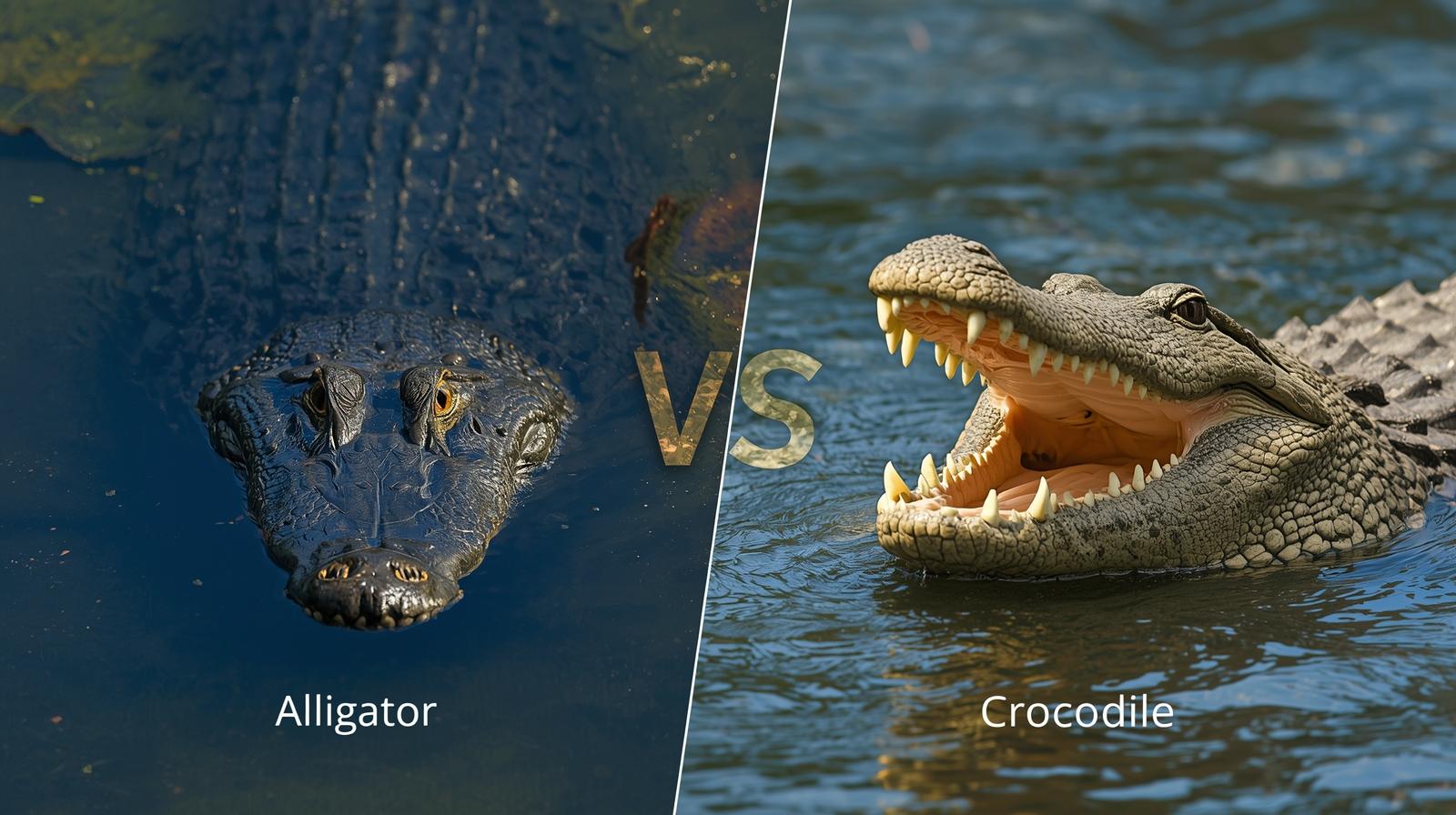
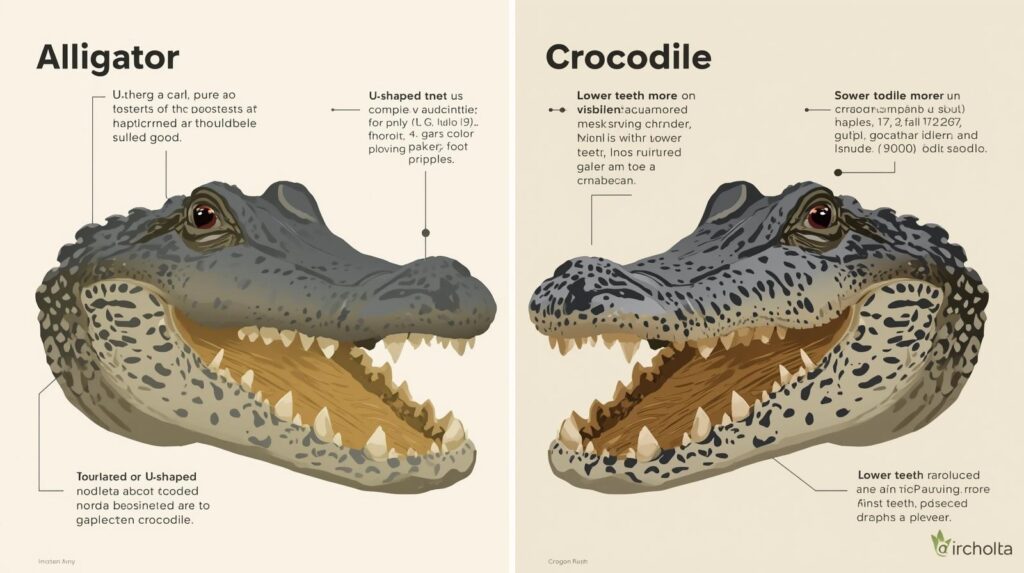
The most reliable way to distinguish between an alligator and crocodile lies in their snout shape. Alligators possess wide, U-shaped snouts designed for crushing prey, while crocodiles feature narrow, V-shaped snouts optimized for catching fish and diverse prey types.
When examining tooth visibility, the alligator vs crocodile difference becomes immediately apparent. Crocodiles display an interlocking tooth pattern where the fourth tooth on the lower jaw remains visible when their mouth closes, creating that infamous “toothy grin.” Alligators, conversely, hide their lower teeth completely when their jaws shut, presenting a smoother profile.
Color variation offers another identification clue. Alligators typically appear darker, ranging from black to grayish-black, helping them blend into murky freshwater environments. Crocodiles often display lighter olive-brown or tan coloring, adapting to their varied habitats that include both freshwater and saltwater environments.
Habitat Preferences: Where Do They Live?
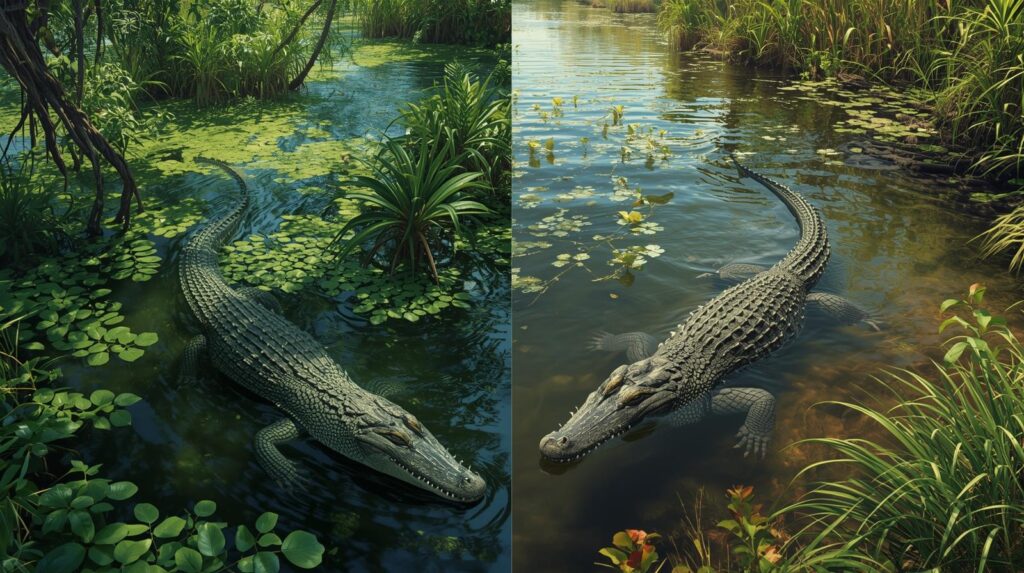
The alligator vs crocodile habitat comparison reveals stark geographical and environmental differences. Alligators predominantly inhabit freshwater environments including swamps, marshes, rivers, and lakes. The American alligator thrives in the southeastern United States, with Florida hosting approximately 1.3 million individuals according to the Florida Fish and Wildlife Conservation Commission.
Crocodiles demonstrate remarkable adaptability, inhabiting freshwater, brackish water, and saltwater environments. Their special salt glands allow crocodiles to filter out excess salt, enabling them to venture into coastal areas and even open ocean something alligators cannot do.
| Feature | Alligator | Crocodile |
|---|---|---|
| Water Type | Freshwater only | Fresh, brackish, saltwater |
| Geographic Range | Southeastern USA, China | Africa, Asia, Australia, Americas |
| Temperature Tolerance | Cold-tolerant (can survive near-freezing) | Prefer tropical/subtropical climates |
| Population (Global) | ~5 million | ~1-2 million (varies by species) |
The American crocodile exists in southern Florida, the Caribbean, and parts of Central and South America. This limited overlap in Florida creates the unique situation where both alligator and crocodile species coexist, making the alligator vs crocodile identification crucial for residents and visitors.
Behavior and Temperament Differences
When evaluating the alligator vs crocodile temperament debate, scientific consensus suggests crocodiles generally exhibit more aggressive behavior toward humans. The saltwater crocodile, found in Australia and Southeast Asia, is considered the most dangerous crocodilian species, responsible for hundreds of attacks annually.
Research published in the Journal of Herpetology indicates that crocodiles display greater territorial aggression and are more likely to perceive humans as prey, particularly in regions where human-crocodile interactions occur frequently. The Nile crocodile in Africa reportedly causes between 200-500 human fatalities each year, according to National Geographic data.
Alligators, while still dangerous and deserving of respect, tend to be more reclusive. The American alligator causes fewer than one fatal attack per year on average in the United States. However, this doesn’t make alligators safe their powerful bite force exceeding 2,000 pounds per square inch makes any encounter potentially deadly.
Hunting and Feeding Patterns
The alligator vs crocodile hunting comparison reveals different predatory strategies. Alligators primarily hunt at night, using their powerful jaws to crush turtles, fish, birds, and mammals. Their diet reflects their freshwater habitat, with fish comprising roughly 60% of adult alligator meals.
Crocodiles exhibit more diverse feeding behaviors adapted to their varied habitats. Saltwater crocodiles, the largest living reptiles reaching up to 23 feet and weighing over 2,000 pounds, hunt everything from fish to water buffalo. Their ambush tactics include the famous “death roll” a spinning maneuver used to dismember larger prey.
Size and Growth Comparison
The alligator vs crocodile size debate depends heavily on species. The American alligator typically reaches 10-15 feet in length, with males occasionally exceeding 16 feet. The largest confirmed American alligator measured 15 feet 9 inches.
Crocodiles generally grow larger. The saltwater crocodile holds the record as the largest living reptile, with confirmed specimens exceeding 20 feet and weighing over a ton. However, not all crocodile species dwarf alligators the dwarf crocodile of West Africa reaches only 5 feet at maturity.
Growth rates differ between alligator and crocodile species. Alligators grow approximately one foot per year during their first six years, slowing considerably afterward. Crocodiles maintain faster growth rates for longer periods, contributing to their typically larger adult sizes.
From my perspective, witnessing a full-grown saltwater crocodile in person fundamentally changes your understanding of prehistoric power. These creatures embody evolutionary perfection, unchanged for millions of years because they simply don’t need improvement.
Conservation Status and Population Trends
The alligator vs crocodile conservation comparison presents a complex picture. The American alligator represents a remarkable conservation success story, rebounding from near-extinction in the 1960s to stable populations exceeding 5 million today. Protective legislation and habitat management transformed this species from endangered to least concern status.
Many crocodile species face more precarious situations. According to the International Union for Conservation of Nature (IUCN), several crocodile species remain critically endangered, including the Philippine crocodile with fewer than 200 individuals remaining in the wild. The gharial, a fish-eating crocodilian from India, has declined by 98% over the past century.
Climate change poses new threats to both alligator and crocodile populations. Temperature-dependent sex determination means that warming temperatures could skew sex ratios, potentially disrupting breeding populations. Habitat loss from coastal development particularly affects crocodile populations in Southeast Asia and Africa.
Safety Tips: What to Do During Encounters
Understanding the alligator vs crocodile difference matters most when you encounter one in the wild. Here are evidence-based safety guidelines:
For Alligator Encounters:
- Maintain distance of at least 30 feet from any alligator
- Never feed alligators fed alligators lose their natural fear of humans
- If an alligator approaches on land, run in a straight line (they can sprint short distances at 20 mph but tire quickly)
- Avoid swimming in waters with posted alligator warnings, especially at dawn or dusk
For Crocodile Encounters:
- Keep even greater distance minimum 50 feet from any crocodile
- Assume all crocodiles are dangerous regardless of size
- Never approach water’s edge in crocodile territory
- If attacked, fight back aggressively target the eyes and throat
The alligator vs crocodile danger assessment shows that while both deserve extreme caution, crocodiles require additional vigilance due to their increased aggression and unpredictability.
Fascinating Facts About These Ancient Predators
The alligator vs crocodile comparison extends beyond physical differences into remarkable biological adaptations:
Alligator Superpowers:
- Can hold their breath underwater for up to two hours
- Immune system produces powerful antibiotics that fight drug-resistant bacteria
- Can survive months without eating during winter dormancy
- Create “gator holes” that provide critical dry-season water sources for entire ecosystems
Crocodile Capabilities:
- Possess the strongest bite force of any living animal (saltwater crocodile: 3,700 PSI)
- Can live 70-100 years in the wild
- Navigate using Earth’s magnetic field similar to sea turtles
- Replace up to 8,000 teeth throughout their lifetime
For those interested in wildlife conservation and environmental topics, Ninty2magazine offers comprehensive coverage of endangered species and ecosystem protection initiatives.
The Evolutionary Journey
The alligator vs crocodile evolutionary split occurred approximately 80 million years ago during the Late Cretaceous period. Both groups survived the catastrophic asteroid impact that eliminated dinosaurs 66 million years ago, demonstrating extraordinary adaptability.
Fossil evidence reveals that ancient crocodilians achieved sizes dwarfing modern species. Deinosuchus, a prehistoric alligator relative, reached lengths of 35 feet and likely preyed on dinosaurs. Sarcosuchus, known as “SuperCroc,” stretched 40 feet long and weighed approximately 8 tons.
Modern alligator and crocodile species represent refined versions of these ancient predators, optimized for their specific ecological niches through millions of years of natural selection.
Economic and Cultural Impact
The alligator vs crocodile debate extends into economic realms. Louisiana’s alligator industry generates over $80 million annually through sustainable hunting programs, leather production, and ecotourism. Crocodile farming in Australia and Southeast Asia produces similar economic benefits while reducing pressure on wild populations.
Culturally, both alligator and crocodile species feature prominently in human mythology and folklore. Ancient Egyptians worshipped Sobek, a crocodile-headed deity symbolizing power and protection. In Native American traditions, alligators represented wisdom and survival.
Modern conservation efforts increasingly recognize the economic value of living alligators and crocodiles, promoting ecotourism as an alternative to hunting. This shift proves particularly important for endangered crocodile species where tourism revenue incentivizes protection.
Conclusion
The alligator vs crocodile distinction encompasses far more than simple identification it represents understanding two magnificent evolutionary success stories that continue thriving in our modern world. From their prehistoric origins to their current conservation challenges, both alligator and crocodile species demand our respect, protection, and fascination.
Whether you’re distinguishing them by snout shape, habitat preference, or temperament, recognizing the alligator vs crocodile differences enhances your appreciation for these remarkable reptiles. Their continued survival depends on informed conservation efforts, habitat protection, and maintaining healthy human-wildlife boundaries.
Frequently Asked Questions
Can alligators and crocodiles mate with each other?
No, alligators and crocodiles cannot interbreed despite both being crocodilians. They belong to different families (Alligatoridae vs. Crocodylidae) and diverged evolutionarily approximately 80 million years ago. Their genetic differences prevent successful reproduction, similar to how horses and cows cannot interbreed despite both being mammals.
Which is more dangerous to humans: alligator or crocodile?
Crocodiles are statistically more dangerous to humans than alligators. Saltwater and Nile crocodiles cause hundreds of human fatalities annually, while American alligators cause less than one fatal attack per year on average. Crocodiles exhibit more aggressive territorial behavior and are more likely to view humans as potential prey.
Why are alligators only found in America and China?
Alligators have a limited geographic range due to their evolutionary history and environmental requirements. They evolved in these regions and became isolated by continental drift and climate changes. Unlike crocodiles, alligators lack specialized salt glands, restricting them to freshwater habitats and preventing oceanic dispersal to new continents. The Chinese alligator represents a relict population from when alligators had wider distribution across the Northern Hemisphere.
How can you tell an alligator from a crocodile in the water?
When only the head is visible, observe the snout shape: U-shaped indicates alligator, V-shaped indicates crocodile. Check tooth visibility if you see teeth protruding when the mouth is closed (especially the fourth lower tooth), it’s a crocodile. Color can help too: darker coloration suggests alligator, while lighter tan or olive suggests crocodile. Geographic location provides the strongest clue: in the U.S., if you’re anywhere except southern Florida, it’s almost certainly an alligator. But here’s the critical question: if you’re close enough to make these observations in the wild, aren’t you already too close for safety?