Understanding Tennis Elbow and Golf Elbow
When I first experienced sharp pain radiating down my forearm after a weekend of home renovations, I had no idea whether I was dealing with tennis elbow or golf elbow. Like many people, I assumed these conditions only affected athletes. I was wrong.
The comparison between tennis elbow vs golf elbow reveals two distinct yet surprisingly similar conditions that affect millions of people worldwide. Tennis elbow has a prevalence of 1-3% of the population with an incidence of 4-7 per 1,000 people years, while golfer’s elbow is about one seventh as common as tennis elbow. These aren’t just sports injuries they’re overuse conditions that can impact anyone from carpenters to computer users.
Understanding the distinction between tennis elbow and golf elbow is crucial for proper diagnosis and treatment. Both conditions involve tendon inflammation around the elbow joint, but they affect opposite sides of the arm. This comprehensive guide will explore everything you need to know about tennis elbow vs golf elbow, including causes, symptoms, treatment options, and prevention strategies.
What Is Tennis Elbow?
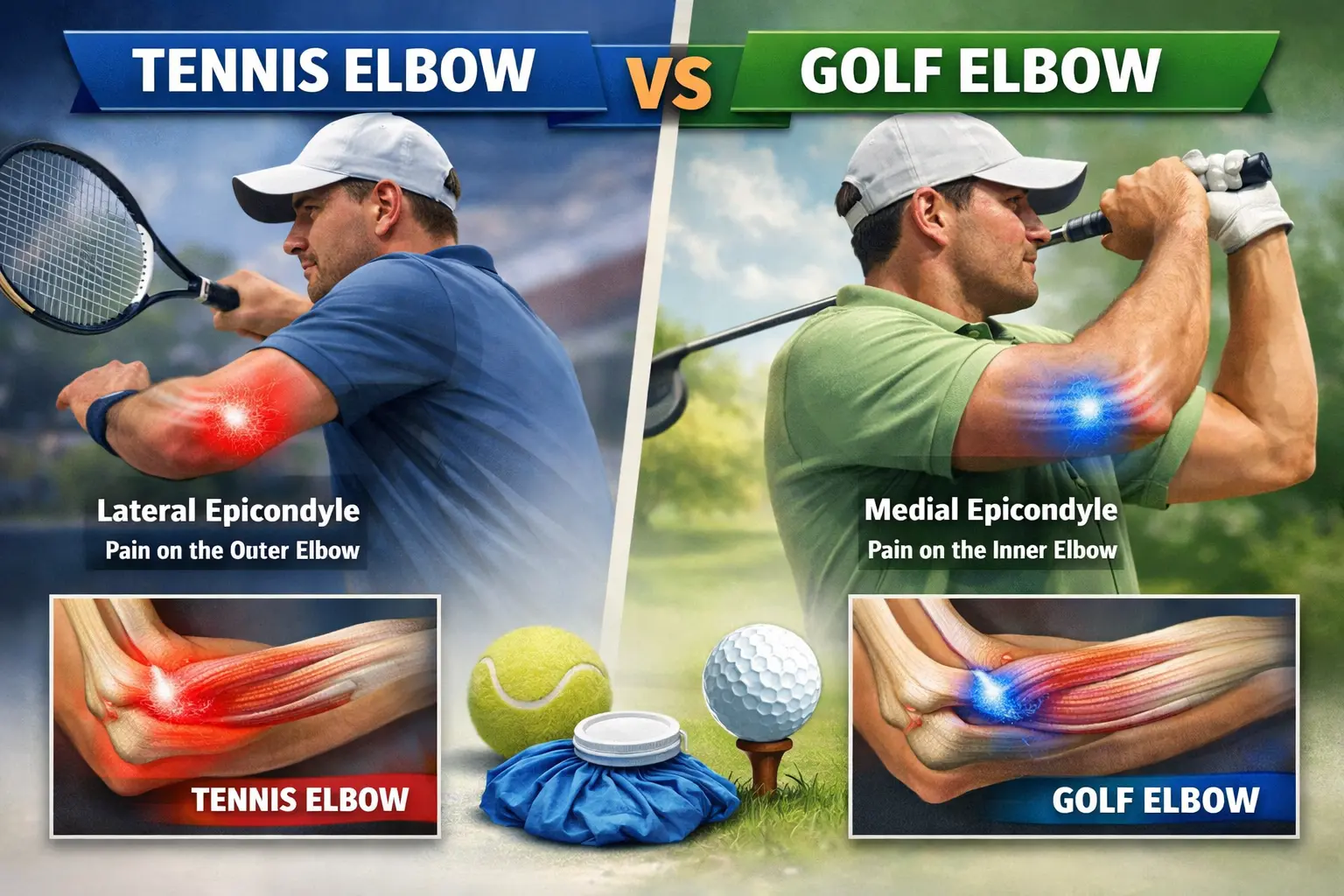
Tennis elbow, medically known as lateral epicondylitis, affects the outer portion of your elbow joint. The condition involves the extensor carpi radialis brevis and extensor digitorum communis of the forearm, which extend and stabilize the wrist.
Despite its name, fewer than 5% of tennis elbow diagnoses are related to the sport. The condition typically develops from repetitive wrist extension movements against resistance. Tennis elbow most often affects your dominant arm, and it is estimated that up to 20 percent of patients have some degree of bilateral tennis elbow.
Research shows that the age- and sex-adjusted annual incidence of lateral elbow tendinosis decreased significantly over time from 4.5 per 1000 people in 2000 to 2.4 per 1000 in 2012, suggesting improved awareness and prevention strategies.
Common Causes of Tennis Elbow
The debate around tennis elbow or golf elbow often centers on their causes. Tennis elbow develops through various activities beyond racquet sports:
- Repetitive computer mouse use and typing
- Painting and decorating work
- Carpentry and plumbing tasks
- Prolonged use of hand tools like screwdrivers
- Cutting activities, especially in food preparation
- Gardening and yard work
Tennis elbow is most common in people ages 30 to 50, although the condition can be seen in people of all ages. The peak incidence occurs during middle age when people are most active in their careers and hobbies.
What Is Golf Elbow?
Golf elbow, or medial epicondylitis, affects the inner side of your elbow. This condition involves inflammation of the tendons that attach your forearm muscles to the medial epicondyle on the inside of your elbow.
When examining tennis elbow vs golf elbow prevalence, golf elbow is significantly less common. Golfer’s elbow is less prevalent, affecting less than 1% of the population. However, this doesn’t make it any less debilitating for those who suffer from it.
Common Causes of Golf Elbow
Golf elbow develops from activities involving repetitive wrist flexion and gripping:
- Golf swings with improper technique
- Throwing sports like baseball and cricket
- Rock climbing and weightlifting
- Repetitive hammering or use of wrenches
- Computer work and prolonged typing
- Gardening and yard maintenance
The condition results from overuse of the wrist flexor muscles, which control the forward bending motion of your wrist.
Tennis Elbow vs Golf Elbow: Key Differences
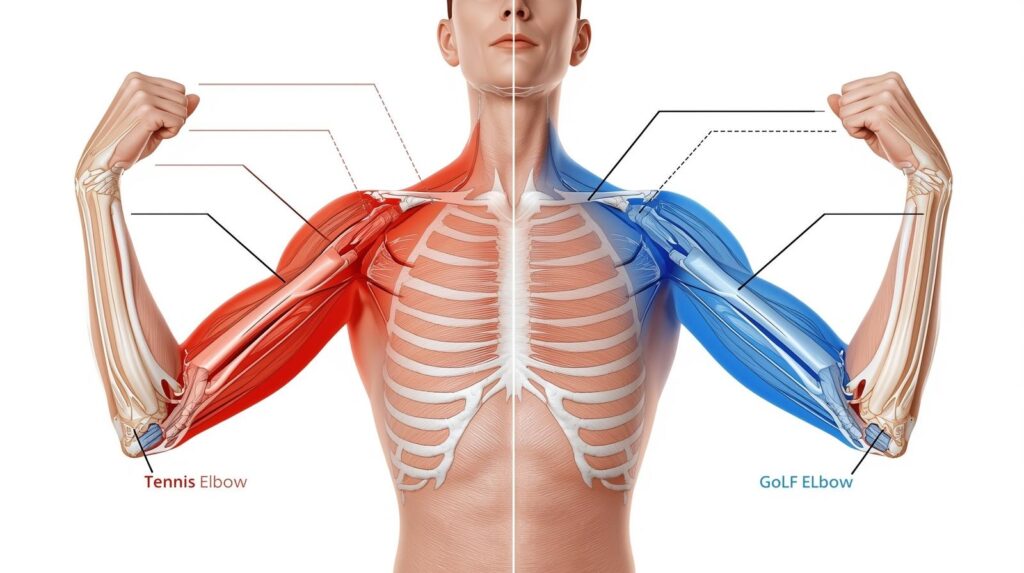
Understanding tennis elbow vs golf elbow requires examining several critical factors that distinguish these conditions.
Location of Pain
The primary difference when comparing tennis elbow vs golf elbow is pain location:
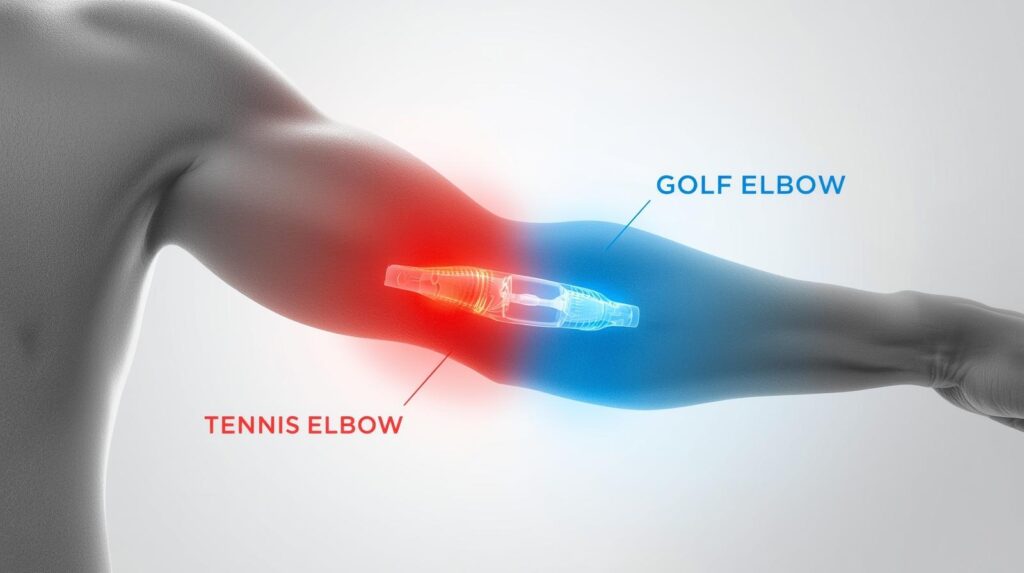
- Tennis Elbow: Pain occurs on the outer (lateral) side of the elbow and may radiate down the forearm
- Golf Elbow: Pain appears on the inner (medial) side of the elbow and can extend toward the wrist
A quick telltale sign is to ask yourself which motion results in pain: If it hurts to close your hand in a grip, you may have golfer’s elbow; if it hurts to straighten your fingers, you may have tennis elbow.
Affected Tendons and Muscles
The anatomical distinction between tennis elbow and golf elbow is significant:
| Aspect | Tennis Elbow | Golf Elbow |
|---|---|---|
| Medical Name | Lateral Epicondylitis | Medial Epicondylitis |
| Location | Outer elbow | Inner elbow |
| Affected Tendons | Extensor tendons | Flexor tendons |
| Primary Movement | Wrist extension | Wrist flexion |
| Prevalence | 1-3% of population | Less than 1% of population |
| Age Range | 30-50 years (peak) | 50+ years (common) |
Symptoms Comparison
While both conditions share similarities, the symptoms of tennis elbow vs golf elbow differ in specific ways:
Tennis Elbow Symptoms:
- Pain radiating from outside of elbow to forearm
- Weakness in grip strength
- Difficulty lifting objects
- Pain when extending wrist or fingers
- Discomfort when shaking hands or turning doorknobs
Golf Elbow Symptoms:
- Pain on inner elbow during gripping activities
- Tenderness when touching the medial epicondyle
- Numbness or tingling in fingers (especially ring and little fingers)
- Weakness when flexing the wrist
- Stiffness in the elbow joint
Diagnosis and Testing
Proper diagnosis is essential when evaluating tennis elbow vs golf elbow. Healthcare providers use several methods:
Physical Examination Tests
Medical professionals employ specific tests to differentiate between tennis elbow and golf elbow:
For tennis elbow, the Cozen’s test involves extending the wrist against resistance while the doctor palpates the lateral epicondyle. Pain in the area of lateral epicondyle is a positive result.
For golf elbow, the golfer’s elbow test pronates and flexes the wrist and forearm at the same time, with pain over the medial aspect indicating a positive result.
Imaging and Advanced Testing
While physical examination usually suffices, some cases require:
- X-rays to rule out arthritis or bone spurs
- MRI scans for severe or persistent cases
- Ultrasound to assess tendon damage
- Nerve conduction studies if numbness is present
Treatment Options for Tennis Elbow vs Golf Elbow
The good news about tennis elbow vs golf elbow is that treatment approaches are remarkably similar. About 80-85% of cases improve significantly within 12 months without surgery.
Conservative Treatment Methods
Both tennis elbow and golf elbow respond well to non-surgical interventions:
Rest and Activity Modification The first step involves reducing or eliminating activities that aggravate the condition. This doesn’t mean complete immobilization gentle movement helps maintain flexibility.
Ice Therapy Applying ice packs for 20-30 minutes several times daily reduces inflammation and pain in both tennis elbow and golf elbow cases.
Physical Therapy Physiotherapy can provide you with strengthening exercises that reduce the pain and is a long-term approach to decrease the chances of the pain recurring. Therapists use various techniques including:
- Eccentric strengthening exercises
- Stretching protocols
- Manual therapy techniques
- Ultrasound therapy
- Laser therapy
Bracing and Support Taping, a brace, or a wrist splint can reduce the strain on your tendons. Counterforce braces are particularly effective for both conditions.
Medication Over-the-counter anti-inflammatory drugs like ibuprofen provide temporary relief for tennis elbow and golf elbow symptoms.
Advanced Treatment Options
When conservative methods fail after several months, additional interventions include:
- Corticosteroid injections for pain relief
- Platelet-rich plasma (PRP) therapy
- Shockwave therapy to stimulate healing
- Dry needling to release muscle tension
Surgical Intervention
Surgery becomes necessary in a small percentage of cases when tennis elbow or golf elbow doesn’t respond to conservative treatment after 6-12 months. Surgical options include:
- Arthroscopic debridement
- Open tendon repair
- Tendon release procedures
Prevention Strategies
Preventing tennis elbow and golf elbow requires attention to technique and ergonomics across various activities.
Workplace Ergonomics
For office workers comparing risk factors of tennis elbow vs golf elbow:
- Position your keyboard and mouse at proper heights
- Take regular breaks every 30-60 minutes
- Use ergonomic tools and equipment
- Maintain proper posture throughout the workday
Sports and Recreation
Athletes should focus on:
- Proper technique coaching and instruction
- Gradual increase in training intensity
- Appropriate equipment sizing (grip size matters)
- Regular stretching and strengthening programs
- Adequate rest between sessions
Strengthening Exercises
Both tennis elbow and golf elbow benefit from targeted exercises:
For Tennis Elbow:
- Wrist extension exercises with light weights
- Finger extension using rubber bands
- Forearm strengthening with pronation/supination movements
For Golf Elbow:
- Wrist flexion curls
- Grip strengthening exercises
- Forearm stretches
Recovery Timeline and Prognosis
Understanding recovery expectations for tennis elbow vs golf elbow helps set realistic goals.
Tennis elbow usually develops gradually, starting off as mild discomfort and worsening as time passes. The same applies to golf elbow. Most people experience:
- Weeks 1-4: Initial rest and pain management phase
- Weeks 4-8: Gradual strengthening and rehabilitation
- Weeks 8-16: Return to modified activities
- Months 4-12: Full recovery for most cases
Early intervention significantly improves outcomes for both tennis elbow and golf elbow. Seeking treatment at the first sign of symptoms prevents progression to chronic conditions.
When to Seek Medical Attention
Knowing when to consult a healthcare provider about tennis elbow or golf elbow is crucial. Schedule an appointment if you experience:
- Pain persisting beyond two weeks despite rest
- Increasing pain intensity
- Severe weakness in the affected arm
- Numbness or tingling that worsens
- Inability to perform daily activities
- Swelling or visible deformity
Living with Tennis Elbow or Golf Elbow
Managing tennis elbow vs golf elbow successfully requires lifestyle adaptations. Through my own experience recovering from tennis elbow, I learned that patience and consistency with treatment protocols make the difference between quick recovery and chronic pain.
Simple modifications help manage both conditions:
- Use both hands for lifting objects
- Avoid repetitive movements when possible
- Maintain strength in shoulder and core muscles
- Stay hydrated and maintain good overall health
- Listen to your body’s pain signals
The Role of Professional Guidance
While understanding tennis elbow vs golf elbow helps you recognize symptoms, professional medical advice remains essential. Physical therapists, orthopedic specialists, and sports medicine doctors provide personalized treatment plans based on your specific situation.
For more health and wellness insights, visit Ninty2magazine for expert articles on injury prevention and recovery.
According to medical research, early intervention and proper diagnosis significantly improve recovery outcomes for both tennis elbow and golf elbow.
Conclusion: Making Informed Decisions About Elbow Pain
The comparison between tennis elbow vs golf elbow reveals two manageable conditions when addressed promptly. While tennis elbow affects the outer elbow and golf elbow impacts the inner side, both respond to similar treatment protocols. Understanding the differences between tennis elbow and golf elbow empowers you to seek appropriate care and implement preventive measures.
Most cases of tennis elbow or golf elbow resolve with conservative treatment, though patience remains key. Whether you’re an athlete, office worker, or manual laborer, recognizing the early signs of tennis elbow vs golf elbow helps prevent chronic problems.
Remember that tennis elbow and golf elbow don’t discriminate anyone performing repetitive arm movements risks developing these conditions. The good news? With proper treatment and prevention strategies, you can overcome tennis elbow or golf elbow and return to your favorite activities pain-free.
Frequently Asked Questions
Can you have both tennis elbow and golf elbow simultaneously?
Yes, it’s possible to have both tennis elbow and golf elbow at the same time, though it’s relatively uncommon. Some people develop both conditions due to occupations or activities that stress both the inner and outer elbow tendons. Treatment approaches remain similar whether you have one or both conditions.
How long does it take to fully recover from tennis elbow vs golf elbow?
Recovery time varies by individual, but most people see significant improvement within 6–12 months with proper treatment. Some cases resolve within weeks with early intervention, while chronic conditions may take longer. The key difference between tennis elbow and golf elbow recovery is that golf elbow sometimes responds faster to treatment due to better blood supply to the medial tendons.
Will tennis elbow or golf elbow come back after treatment?
Recurrence is possible, especially if you return to the activities that caused the initial injury without proper technique modifications or preventive measures. Studies show recurrence rates around 8.5% for tennis elbow. Proper strengthening, technique correction, and gradual return to activities significantly reduce recurrence risk for both tennis elbow and golf elbow.
Are there any new treatments for tennis elbow and golf elbow?
Recent advances include platelet-rich plasma (PRP) injections, extracorporeal shockwave therapy, and regenerative medicine approaches showing promise for treating both tennis elbow and golf elbow. However, traditional conservative treatments remain the gold standard, with these newer options reserved for resistant cases.
Does age affect recovery from tennis elbow vs golf elbow?
Age can influence recovery time and outcomes. Younger patients often recover faster, while those over 50 may experience slower healing. However, age shouldn’t discourage treatment people of all ages successfully recover from both tennis elbow and golf elbow with appropriate care. Early warning signs during daily activities should never be ignored, as early treatment leads to faster recovery.