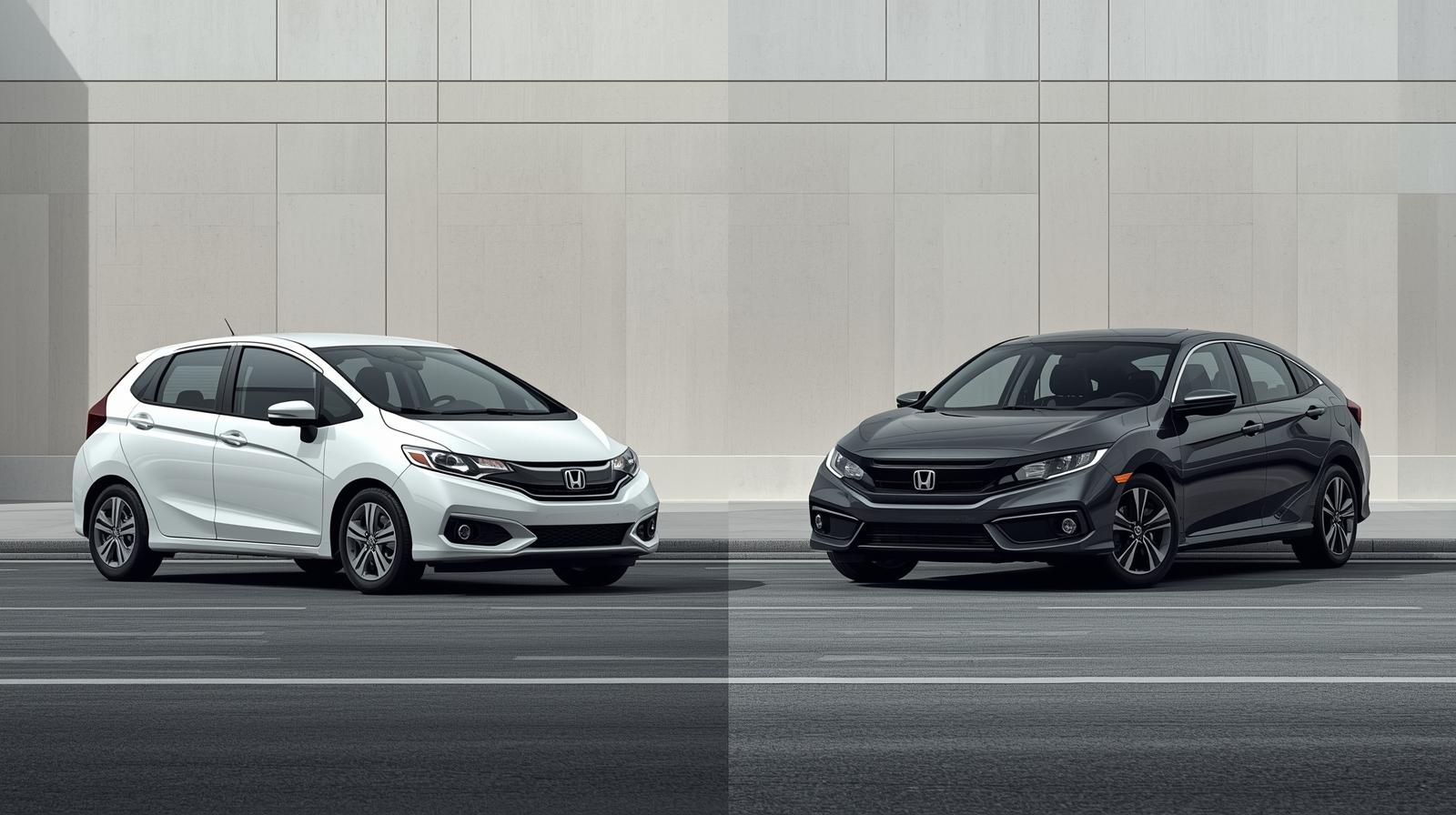
When I first walked into a Honda dealership five years ago, I faced the same dilemma thousands of car buyers encounter: should I choose the Honda Fit or Honda Civic? Both offered Honda’s legendary reliability, but each promised something different. That decision-making process taught me valuable lessons about what truly matters when comparing these two iconic cars.
The Honda Fit vs Honda Civic debate isn’t just about picking between two vehicles it’s about understanding your lifestyle, budget, and long-term automotive needs. With the Fit discontinued in North America after 2020 and the Civic evolving into a hybrid powerhouse by 2025, this comparison has never been more relevant for used car shoppers and new Civic buyers alike.
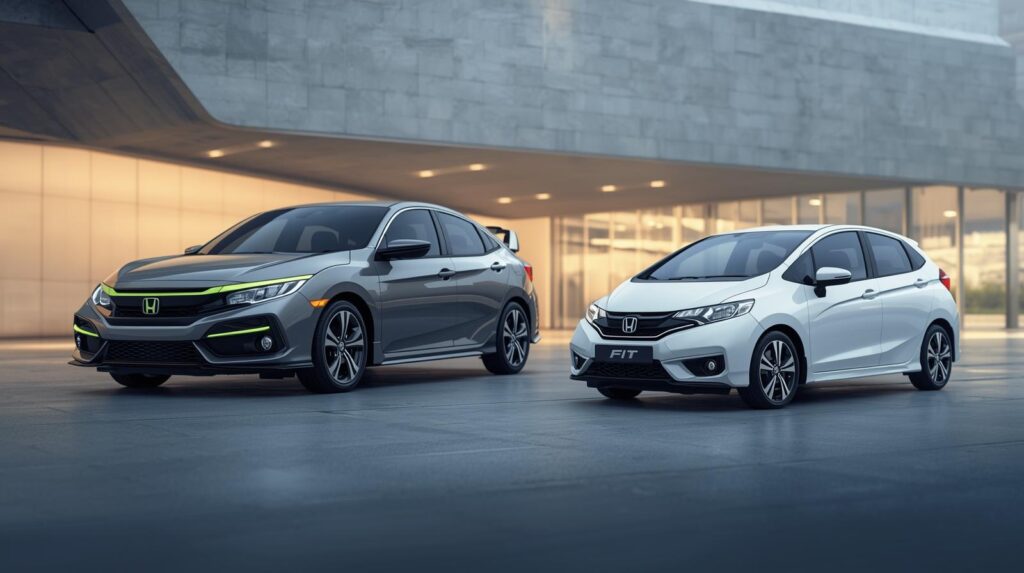
Table of Contents
Understanding the Honda Fit and Honda Civic Legacy
The automotive landscape changed dramatically when Honda discontinued the Fit in 2020, making this comparison particularly important for those considering used Fits or wondering what replaced them. Meanwhile, the Honda Civic continues thriving as America’s bestselling compact car with sales up 21 percent in 2024.
The Honda Fit’s Remarkable Journey
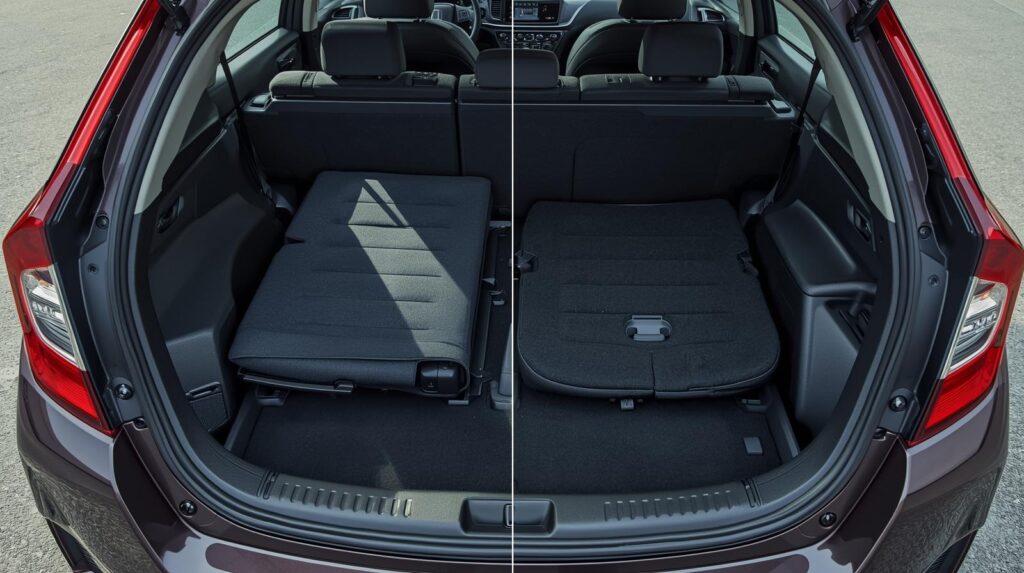
The Honda Fit arrived in North America for the 2007 model year, bringing Japanese-market innovation to American roads. What made the Fit special? Its revolutionary “Magic Seat” system transformed this subcompact hatchback into a cargo-hauling champion. I remember helping a friend move apartments using her 2015 Fit we fit a 6-foot bookshelf inside by folding the seats flat. That moment perfectly illustrated why the Fit earned such devoted fans.
By 2018, Honda Fit sales were less than half of what they were at their 2008 peak, reflecting broader market shifts toward SUVs. The crossover boom ultimately sealed the Fit’s fate in America, though it continues selling internationally as the Honda Jazz.
The Civic’s Enduring Excellence
The Honda Civic, conversely, represents automotive royalty. The 2025 Honda Civic has a starting sticker price of $25,400, positioning it as Honda’s entry-level model after the Fit’s departure. The Civic’s evolution showcases Honda’s commitment to staying relevant from introducing turbocharged engines to launching hybrid-electric models expected to represent about 40% of Civic sales.
Honda Fit vs Honda Civic: Comprehensive Specifications Comparison
| Feature | Honda Fit (2020) | Honda Civic (2025) |
|---|---|---|
| Starting Price | $16,190 | $24,250 |
| Engine Power | 130 hp | 150 hp (200 hp hybrid) |
| Fuel Economy | 31 mpg combined | 36 mpg (49 mpg hybrid) |
| Cargo Space | 52.7 cu ft (seats folded) | 46.2 cu ft (hatchback) |
| Reliability Rating | 8.2/10 | 8.1/10 |
| Body Styles | 5-door hatchback | Sedan, hatchback |
| Annual Repair Cost | $390 | $368 |
This table reveals the fundamental trade-offs between the Honda Fit and Honda Civic. The Honda Civic’s base engine makes 174 horsepower, and the Honda Fit base engine makes 130 horsepower, showing the power advantage the Civic holds.
Performance: Honda Fit or Honda Civic for Your Driving Style?
Everyday Driving Dynamics
When comparing Honda Fit and Honda Civic performance, context matters tremendously. The Fit felt nimble darting through city traffic, its lightweight construction and short wheelbase making parking effortless. However, the Civic is rated to deliver an average of 34 miles per gallon, with a highway range of 496 miles, giving it superior long-distance capability.
The Honda Fit excelled in urban environments where its compact dimensions proved advantageous. Yet on highways, the power difference became apparent the Civic’s additional 20-44 horsepower (depending on trim) provided confident passing ability and smoother highway cruising.
Handling and Ride Quality
Both the Honda Fit and Civic deliver engaging driving experiences, though with different personalities. The Honda Civic has the advantage of offering more interior volume, reflected in more front shoulder room, front leg room, rear shoulder room, and cargo space. This extra space translates into a more planted, stable ride quality.
The Civic’s sophisticated suspension tuning delivers comfort without sacrificing responsiveness. The 2025 model particularly impresses with its refined road manners. Meanwhile, the Fit prioritized maneuverability, making it feel like a go-kart in parking lots but slightly less composed on rough roads.
Interior Space and Versatility: A Critical Distinction
The Magic Seats Advantage
The Honda Fit’s defining feature remains its innovative seating system. The Fit delivers 16.6 cubic feet of cargo space behind the rear seats when they are up, and up to 52.7 cubic feet of cargo space with its seats folded. This versatility meant fitting items you’d expect to need a larger vehicle for bicycles, furniture, even small appliances all while maintaining a tiny parking footprint.
I’ve personally witnessed Fit owners transport full-sized Christmas trees, 8-foot lumber, and even washing machines using the unique seat configurations. This practical versatility made the Fit punch well above its weight class.
Civic’s Refined Cabin Experience
The Honda Civic prioritizes refinement over maximum versatility. The Honda Civic’s interior has a tasteful simplicity with understated design using clean lines and a handsome honeycomb-style mesh strip across the dash. Material quality feels upscale, and the ergonomics prove superior for longer journeys.
While the Civic offers impressive space for a compact car, it can’t match the Fit’s transformative cargo capabilities. The trade-off? A quieter, more comfortable environment for daily commuting and road trips.
Cost Analysis: Honda Fit vs Honda Civic Ownership
Purchase Price Considerations
The pricing gap between Honda Fit and Honda Civic creates the most immediate decision point. A used 2020 Honda Civic ranges from $16,998 to $34,995 while a used 2020 Honda Fit is priced between $13,464 to $23,554, making the Fit more accessible for budget-conscious buyers.
For Ninty2magazine readers tracking automotive trends, this price difference reflects market positioning the Fit targeted first-time buyers and city dwellers prioritizing affordability, while the Civic appeals to buyers seeking a more premium compact car experience.
Long-Term Value Retention
Depreciation analysis reveals interesting patterns. Looking at the 5-year depreciation rate for both models, the Honda Civic loses 28.3 percent of its value and the Honda Fit loses 20.6 percent of its value. The Fit’s superior value retention surprised many analysts, reflecting its cult following and practical appeal.
However, with Fit production discontinued, future resale dynamics remain uncertain. Limited supply could maintain stronger used Fit prices, or mainstream buyers’ SUV preferences might soften demand. The Civic’s continued production and broad market appeal provide more predictable long-term value.
Maintenance and Reliability
Both models showcase Honda’s engineering excellence. The Honda Civic Reliability Rating is 4.5 out of 5.0, which ranks it 3rd out of 36 for compact cars with an average annual repair cost of $368. The Fit matches this reliability reputation with a Honda Fit Reliability Rating of 4.5 out of 5.0, ranking 4th out of 21 for subcompact cars with an average annual repair cost of $390.
These near-identical reliability scores mean choosing between Honda Fit and Honda Civic shouldn’t hinge on durability concerns both deliver Honda’s legendary dependability.
Fuel Efficiency: Honda Fit and Honda Civic Economics
Real-World Fuel Consumption
Fuel economy represents a crucial factor when evaluating the Honda Fit vs Honda Civic decision. The Civic is rated to deliver an average of 34 miles per gallon, with a highway range of 496 miles, while the Fit is rated to deliver an average of 31 miles per gallon, with a highway range of 382 miles.
The 2025 Civic Hybrid transforms this equation entirely. In the Civic Hybrid, a 2.0-liter four-cylinder with two electric motors provides a combined 200 horsepower, and the car is rated at up to 49 mpg combined. This efficiency leap makes the hybrid Civic significantly more economical than any Fit model.
Environmental Impact
For environmentally conscious buyers, the hybrid Civic offers meaningful emissions reductions compared to both the gasoline Civic and any Fit variant. This aligns with broader automotive trends compact sedans are proving resilient, drawing back consumers affected by inflation and rising living costs.
Technology and Safety Features
Standard Safety Equipment
Modern safety technology separates new Civics from used Fits considerably. The Honda Sensing suite of safety and driver-assistive technologies is standard on all 2025 Civic models, with enhanced safety performance including increased system visibility for motorcycles and bicycles.
Earlier Fit models lacked many advanced driver assistance systems now considered essential. This technology gap matters significantly for families prioritizing safety. However, both vehicles earned respectable crash test ratings during their respective production runs.
Infotainment Capabilities
The 2025 Civic offers smartphone integration, larger touchscreens, and more sophisticated connectivity than 2020 Fits provided. This technological advancement reflects five years of automotive evolution. For buyers prioritizing cutting-edge tech, the newer Civic clearly leads, though used Fits still offer adequate basic functionality.
Market Context: Why This Comparison Matters Now
The Crossover Revolution
Understanding why we’re comparing Honda Fit vs Honda Civic requires examining market forces. The unstoppable rise of the crossover SUV decreased appetite for small cars in America, fundamentally reshaping Honda’s product strategy.
The HR-V crossover effectively replaced the Fit in Honda’s lineup. For buyers attracted to the Fit’s size and efficiency but wanting SUV styling, the HR-V bridges this gap. However, traditional hatchback enthusiasts find the Civic hatchback provides similar practicality with more power and refinement.
Sales Momentum and Industry Trends
The Civic was up by 21 percent in 2024, making it the bestselling compact car in the country and earning a place in the top 10 bestsellers. This commercial success reflects the Civic’s broad appeal and Honda’s smart product planning.
According to Statista, Small Cars market unit sales are expected to reach 10,400.0k vehicles in 2029, with revenue showing an annual growth rate of 11.35%, indicating continued demand despite SUV dominance.
Making Your Decision: Honda Fit vs Honda Civic
Choose the Honda Fit If…
You prioritize maximum cargo versatility in minimal space, seek the lowest possible entry price, primarily drive in urban environments, value exceptional maneuverability for city parking, or want Honda reliability at bargain pricing. The Fit serves perfectly as a first car, student vehicle, or city commuter for those comfortable with used car purchases.
Choose the Honda Civic If…
You want modern technology and safety features, need confident highway performance, prefer refined ride quality, plan frequent long-distance trips, or value hybrid efficiency. The Civic suits buyers seeking a long-term vehicle with broad capabilities, families needing versatile transportation, or anyone prioritizing resale value and dealer network support.
The Hybrid Civic Game-Changer
The 2025 Civic Hybrid deserves special consideration. Combining 200 horsepower with 49 mpg fuel economy creates a compelling value proposition that neither the regular Civic nor any Fit can match. Though priced higher initially, the hybrid’s efficiency could offset the premium through fuel savings over time.
Personal Perspective: Living with Both Models
Having driven both extensively, I’ve developed deep appreciation for each vehicle’s unique strengths. The Honda Fit rewarded creativity figuring out new ways to maximize its space felt like solving puzzles. Its cheerful personality and accessible pricing made car ownership feel manageable rather than burdensome.
The Honda Civic, conversely, impressed through sophistication. Everything felt more substantial, quieter, more refined. Highway drives became relaxing rather than tiresome. The Civic transformed from simple transportation into a vehicle you genuinely enjoyed driving.
For young professionals on tight budgets, the used Fit remains brilliant. For families, commuters, or anyone seeking a decade-long ownership experience, the new Civic justifies its higher price through superior capabilities and modern features.
Conclusion: The Right Honda for Your Journey
The Honda Fit vs Honda Civic comparison ultimately reveals two philosophies of compact car design. The Fit maximized practicality and value in a subcompact package, while the Civic delivers well-rounded excellence across all criteria. Neither approach is inherently superior your personal priorities determine the winner.
With Fit production ended, finding quality used examples becomes increasingly important for those attracted to its unique proposition. Meanwhile, the Civic’s evolution into a hybrid-dominant lineup positions it perfectly for changing automotive preferences.
Both vehicles showcase why Honda remains America’s most trusted automotive brand. Whether you choose a used Fit or new Civic, you’re selecting reliable, efficient, thoughtfully engineered transportation. The question isn’t which is better absolutely, but which better serves your specific needs, budget, and lifestyle.
Frequently Asked Questions
Is the Honda Fit more reliable than the Honda Civic?
Both vehicles offer nearly identical reliability ratings of 4.5 out of 5.0. The Honda Fit ranks 4th among subcompact cars, while the Honda Civic ranks 3rd among compact cars. Annual repair costs are also very close around $390 for the Fit and $368 for the Civic. Overall, both cars are known for excellent long-term dependability.
Why was the Honda Fit discontinued in America?
Honda discontinued the Fit in the U.S. after 2020 due to declining sales as buyers increasingly shifted toward SUVs and crossovers. By 2018, Fit sales had dropped to less than half of their 2008 peak. The Honda HR-V effectively replaced the Fit, offering similar size with SUV styling that better matched American market trends.
Can the Honda Civic match the Honda Fit’s cargo capacity?
The Honda Civic Hatchback provides up to 46.2 cubic feet of cargo space with the seats folded. However, it still falls short of the Fit’s 52.7 cubic feet and its unique Magic Seat system. The Fit remains superior for cargo flexibility, especially when carrying tall or oddly shaped items.
Which gets better gas mileage: Honda Fit or Honda Civic?
The 2025 Honda Civic delivers about 36 mpg combined, outperforming the 2020 Honda Fit’s 31 mpg. The 2025 Civic Hybrid goes even further, achieving around 49 mpg combined while producing 200 horsepower, making it significantly more efficient and powerful than any Fit model.
Should I buy a used Honda Fit or new Honda Civic in 2025?
Your choice depends on budget and priorities. A used 2020 Honda Fit typically costs between $13,464 and $23,554, offering excellent value and city-friendly versatility. A new 2025 Honda Civic, starting at $24,250, includes modern safety features, improved highway performance, hybrid options, and warranty coverage. For long-term ownership and the latest technology, the Civic is ideal; for affordability and urban practicality, the Fit is a smart choice.