Male vs Female Bearded Dragon: Understanding the Differences
As someone who has spent countless evenings arranging branches in my vivarium and watching my little pet bask beneath the UVB lamp, I’ve grown fond of the world of the bearded dragon and how intricately different the sexes can be. This article dives into male vs female bearded dragon, exploring physical traits, behaviour, care needs, and what it means for you as a keeper.
Table of Contents
Why “Male vs Female Bearded Dragon” Really Matters
When you bring home a bearded dragon, identifying whether it’s male or female isn’t just a fun fact it can shape your care decisions. From tank size, social housing, and behaviour management to breeding risks, understanding male vs female bearded dragon helps you tailor everything.
I remember choosing my “beardie” and wondering: Do I want the calmer female or the showier male? That decision influenced how I set up its environment and interacted with it daily.
Physical Differences: Male vs Female Bearded Dragon
Size and Build
One of the first noticeable differences in the male vs female bearded dragon comparison is size. According to A-Z Animals:
- Males: ~21–24 inches long, 450‑550 g
- Females: ~16–19 inches long, 450‑500 g
While weights may overlap, males generally have slightly longer bodies and broader heads.
Tail Base, Hemipenal Bulges & Femoral Pores
Sexing your beardie relies on specific physical clues:
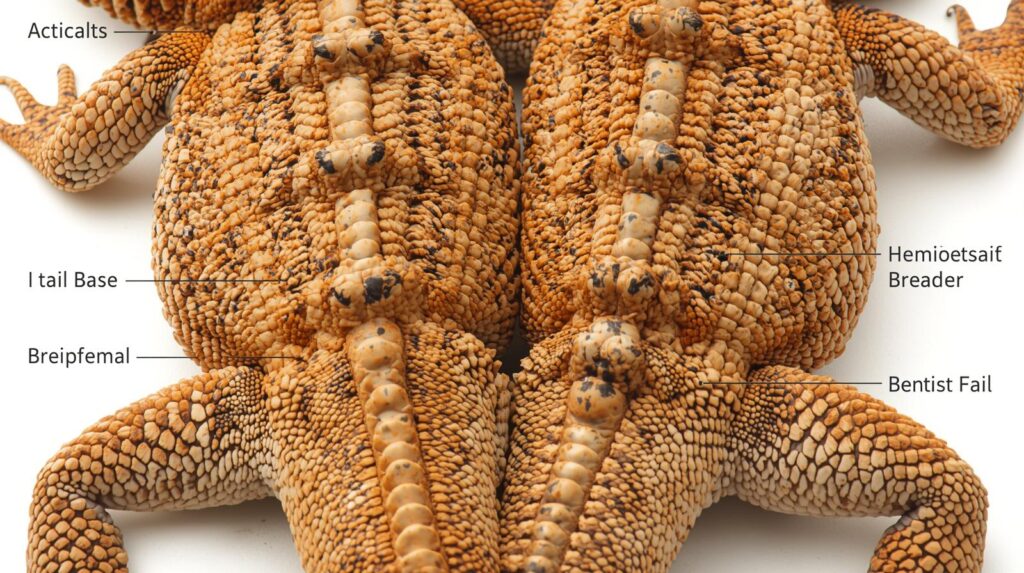
- Males: Two hemipenal bulges at the tail base
- Females: Single bulge centrally
- Males: Larger, darker femoral pores; Females: Smaller, less visible
- Tail base of males tends to be thicker
From my experience, gently checking the tail base and pores in good lighting usually provides a clear indication of sex.
Head Shape & Proportions
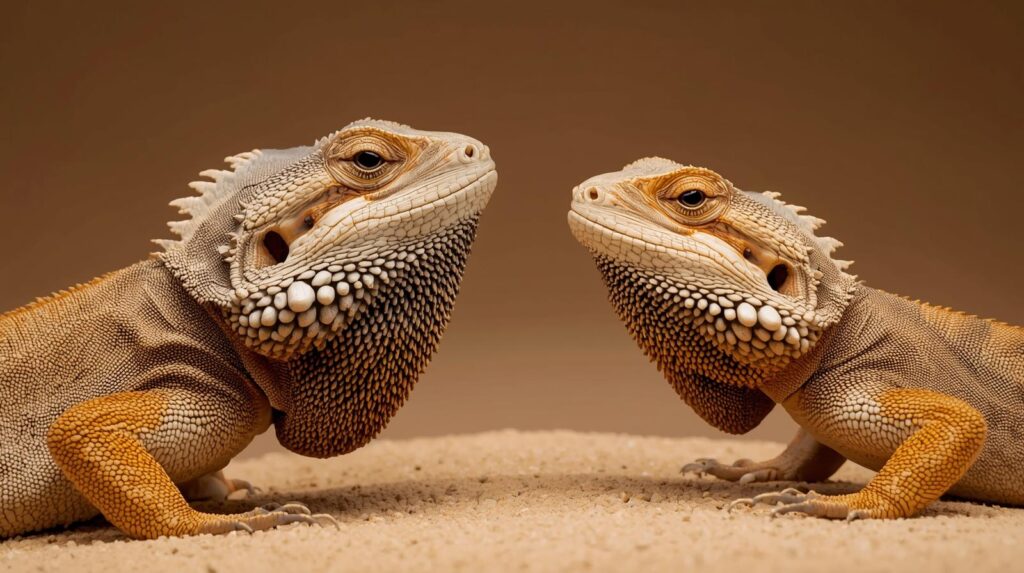
Males develop broader, more angular heads, a stronger “beard” (spiky throat pouch), and a more robust build. Females appear more streamlined. My male kept puffing his beard during feeding, something my female rarely did.
Behavioural Differences Between Male vs Female Bearded Dragon
Territoriality & Display Behaviour
Males are often more territorial, exhibiting:
- Head‑bobbing
- Beard‑darkening
- Throat‑puffing
Females are generally calmer, though digging is common when gravid. Digging is not purely a female trait, but egg‑laying females do it more frequently.
Reproductive & Social Behaviour
- Females: May dig for nesting, lay clutches (11–30 eggs), and store sperm for subsequent clutches.
- Males: Show courtship behaviour and dominance signals.
Understanding these behaviours is key for housing multiple dragons.
Care Considerations: Male vs Female Bearded Dragon
| Feature | Male Bearded Dragon | Female Bearded Dragon |
|---|---|---|
| Enclosure size | Slightly larger → more space needed | Slightly smaller, still needs generous space |
| Social housing | Two males = high dominance risk | Two females may co-exist with caution |
| Breeding risk | With female, repeated clutches possible | Needs nesting zone; egg-laying risk |
| Behaviour management | Head‑bobs, puffed beard, territorial | Digging, nesting behaviour, calmer generally |
I chose a female for my vivarium because I wanted a calmer companion less head‑bobbing at 6 a.m. and fewer dominance tussles.
Trends & Science Behind Male vs Female Bearded Dragon
Sex Determination & Reversal
Central Bearded Dragons (Pogona vitticeps) have genetic sex: males are ZZ, females ZW. High incubation temperatures can cause ZZ eggs to develop into functional females. This means male vs female bearded dragon isn’t always biologically straightforward appearance may not match genetics.
Why It Matters for Keepers
Understanding sex-reversal helps in selecting and breeding dragons responsibly. Environmental factors like heat, UVB exposure, and diet can affect outcomes beyond simply choosing a male or female.
Choosing Which Sex: Male vs Female Bearded Dragon
- First-time keeper: Female bearded dragons are often calmer and easier to manage.
- Experienced keeper: Males display more active behaviours but require space and supervision.
- Verification is key: Don’t rely solely on behaviour or size; check tail base, pores, and bulges.
- Housing multiple dragons: Avoid two males together; two females may co-exist; male + female may breed.
- Tank requirements: At least 40+ gallons, UVB lighting, heat gradient, and a balanced diet are essential regardless of sex.
My Personal Insight
When I first picked up a baby dragon, I hadn’t decided on the sex. The breeder asked: calmer female or show-off male? I chose female and I’m glad. Watching her climb, bask, wave arms, and dig lightly has been a joy. Male dragons are more dramatic puffed beards and head-bobbing but both sexes are wonderful pets.
Conclusion
Understanding male vs female bearded dragon is important but not rigid. Size, tail base, behaviour, and care requirements matter but personality and environment matter more. Whether you lean toward a calm female or a showy male, your focus should be on habitat, enrichment, and health.
FAQ: Male vs Female Bearded Dragon
At what age can I reliably determine a bearded dragon’s sex?
You can usually determine a bearded dragon’s sex around 8–12 weeks of age. This is done by examining hemipenal bulges in males and the tail base. Proper handling and gentle observation are essential at this stage, as incorrect inspection can stress young dragons.
Are male bearded dragons always more aggressive?
Males typically display stronger territorial and dominant behaviors compared to females. This can include head bobbing, beard darkening, and occasional nipping. However, aggression is also influenced by personality, environment, and socialization. Well-cared-for males can coexist peacefully with humans and other dragons under the right conditions.
Can males and females live together safely?
While males and females can cohabit, it requires careful management. Breeding, competition, and stress must be considered. Providing separate hides, feeding zones, and monitoring interactions is key to preventing conflict and ensuring both dragons remain healthy.
Does size indicate a bearded dragon’s health?
Size alone is not a reliable indicator of health. Growth is influenced by genetics, diet, UVB exposure, and overall husbandry. A smaller dragon may still be healthy if it receives proper nutrition and care, while a larger dragon may have underlying health issues if other needs are neglected.
Which sex is better suited for beginners?
Many beginners find females easier to manage due to their calmer and less territorial nature. Males may require more space and social management. Regardless of sex, all bearded dragons need consistent care, proper lighting, diet, and enrichment to thrive. check Ninty2magazine.