The Battle Between Two Wheels That Changed Urban Culture
I still remember standing in a skate shop seven years ago, staring at two seemingly similar boards hanging on the wall. One was short and aggressive-looking; the other stretched out like a surfboard on wheels. That moment sparked a journey into understanding the longboard vs skateboard debate that continues to shape how millions ride today.
The choice between a longboard and skateboard isn’t just about picking a piece of wood with wheels it’s about choosing a lifestyle, a commuting method, or a competitive sport. In 2024, the US skateboard market alone reached USD 2.44 billion, with projections showing continued growth to USD 2.52 billion in 2025. This explosive growth reflects how both boards have captured the imagination of riders worldwide.
Whether you’re a complete beginner wondering which board to start with, or an experienced rider considering adding another deck to your collection, understanding the longboard vs skateboard distinction will transform how you approach wheeled sports.
What Makes Longboards and Skateboards Different?
Design and Construction Fundamentals
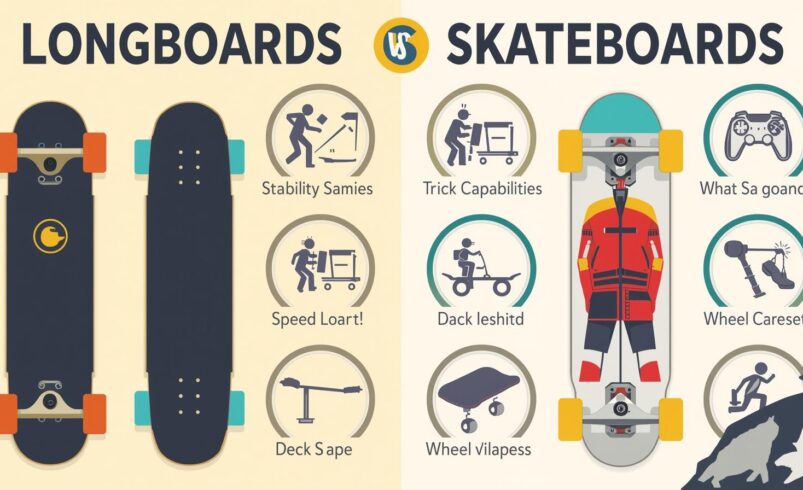
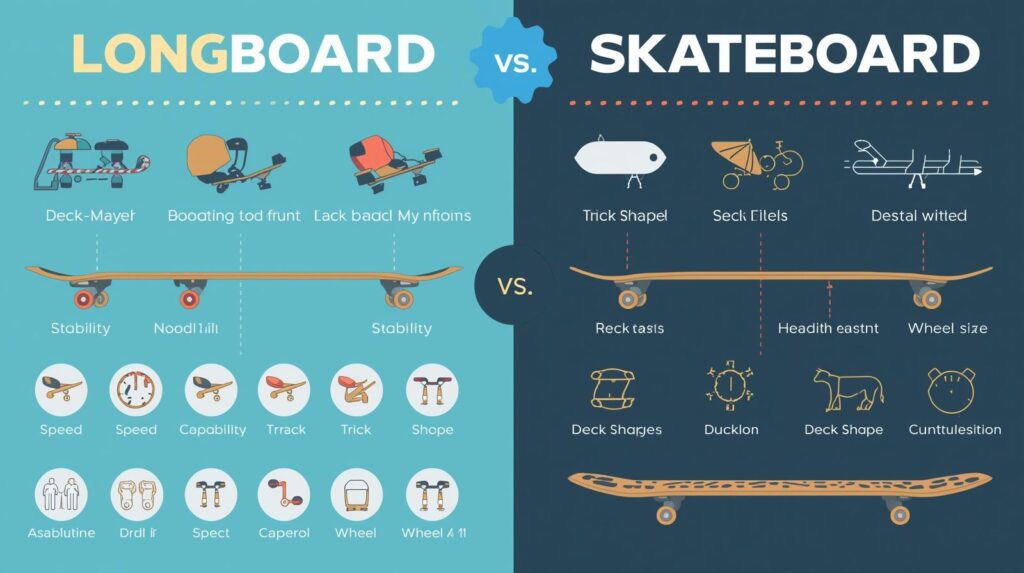
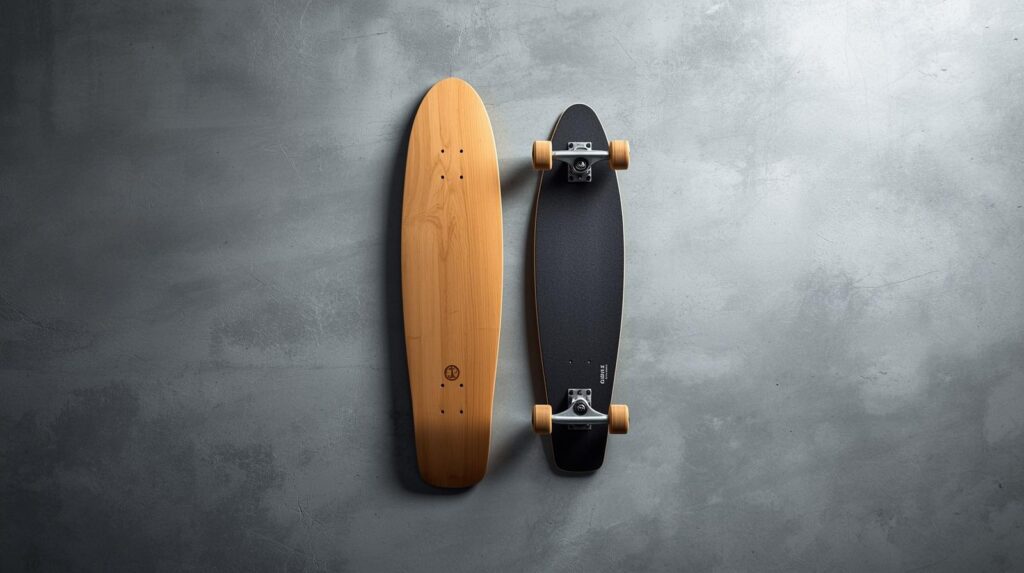
The most obvious difference in the longboard vs skateboard comparison lies in their physical characteristics. Longboards feature extended decks and larger wheels, offering a stable and smooth ride ideal for downhill cruising, carving, and long-distance riding.
Traditional skateboards typically measure 28-33 inches with a curved kicktail at both ends. Their compact size makes them incredibly maneuverable for tricks and technical street skating. The deck width ranges from 7.5 to 8.5 inches, with harder wheels (95A-101A durometer) designed for smooth skatepark surfaces.
Longboards, conversely, stretch from 33 to 60 inches in length. They feature larger, softer wheels (75A-85A durometer) that absorb road vibrations beautifully. The deck construction often uses multiple layers of bamboo or maple, creating flexibility for carving motions that mimic surfing.
Performance Characteristics
When examining longboard vs skateboard performance, each excels in distinct scenarios. Skateboards dominate in technical environments where quick direction changes and aerial tricks are paramount. Their small wheels and narrow deck enable rapid pivots and flip tricks that define modern street skating.
Longboards are increasingly favored due to their sustainability, flexibility, and aesthetic appeal, particularly bamboo construction which offers lightweight yet strong composition. This makes them superior for distance travel, with riders comfortably cruising 5-10 miles without the foot fatigue common on traditional skateboards.
Market Trends: The Numbers Behind the Boards
Current Market Statistics
| Category | 2024 Value | 2025 Projection | Growth Rate |
|---|---|---|---|
| Street Boards | $312.1M | $323.6M | 3.7% |
| Cruiser Boards | $135.4M | $142.3M | 5.1% |
| Longboards | $128.5M | $135.4M | 5.4% |
The skateboard market shows consistent growth across all product types, highlighting expanding popularity and market demand. This data reveals fascinating insights into the longboard vs skateboard marketplace dynamics.
The Longboard Revolution
Longboards have emerged as the fastest-growing category in the skateboard market, driven by growing interest in long-distance skateboarding, competitive downhill events, and an expanding community of enthusiasts.
The longboard and skateboard segments serve different demographics. The global longboards market was valued at approximately USD 2.5 billion in 2023 and is projected to reach around USD 4.8 billion by 2032, exhibiting a CAGR of 7.5%. This outpaces traditional skateboard growth significantly.
From my personal experience testing both styles, I’ve noticed how longboards attract not just teenagers but also adults seeking practical transportation alternatives. This demographic shift explains the remarkable market expansion.
Choosing Your Perfect Ride: Practical Considerations
For Beginners: Which Board Should You Start With?
For newcomers, the longboard vs skateboard decision largely depends on your goals. If you want to learn tricks, grind rails, and master skateparks, a skateboard is the way to go. If you’re looking for smooth commutes, relaxed cruising, or downhill speed, a longboard is the better choice.
Longboards are especially appealing to beginners and older riders because their larger wheelbase offers added stability, helping newcomers find balance quickly and confidently.
For complete beginners focused primarily on transportation, starting with a longboard is often the smarter choice. The learning curve is gentler, and most riders can cruise comfortably within days rather than weeks. However, if your goal is to master kickflips, ollies, and other tricks, stick with a skateboard from the start—skills don’t always translate perfectly between the two boards.
Skill Development Pathways
Skateboard Skills:
- Ollies and flip tricks
- Grinds and slides on obstacles
- Vert and bowl riding
- Technical street combinations
Longboard Skills:
- Carving and pumping techniques
- Slide control for braking
- Downhill speed management
- Dancing and cross-stepping
The longboard vs skateboard skill sets rarely overlap completely. Many riders eventually own both, using each for different occasions. I keep a skateboard for skatepark sessions and a longboard for my daily coffee shop runs they complement each other perfectly.
Transportation Revolution: Boards as Commuter Tools
Urban Mobility Trends
Electric longboards are becoming a preferred mode of transport for short commutes in cities, driven by the shift toward micro-mobility solutions. This transformation has redefined the longboard and skateboard discussion beyond recreational use.
Cities worldwide are embracing skateboarding infrastructure. In 2024, local governments and private organizations invested $120 million in building or renovating skateparks, with over 200 new skateparks set to open by 2025. This infrastructure boom benefits both longboard and skateboard communities.
Environmental Impact
The surging trend of sustainable and eco-friendly products has influenced consumer preferences significantly, with increasing use of sustainable materials like bamboo in longboard construction. This environmental consciousness particularly resonates with longboard manufacturers who’ve embraced bamboo and recycled materials.
The carbon footprint of a board-based commute versus driving is staggering. A typical 3-mile car commute produces roughly 1.5 pounds of CO2 daily. That same distance on a longboard? Zero emissions and a great workout. Over a year, switching to board commuting can save over 500 pounds of CO2 roughly equivalent to planting 23 trees.
Electric Evolution: The Future of Boarding
Electric Skateboard Market Explosion
The Electric Longboard Market was valued at USD 3.51 billion in 2024 and is expected to reach USD 4.52 billion by 2032, growing at a 3.2% CAGR. This represents perhaps the most significant evolution in the longboard vs skateboard landscape.
Electric boards blur traditional distinctions. They offer skateboard maneuverability with longboard stability, appealing to commuters who want minimal physical effort with maximum range. Modern electric boards achieve 25+ mph speeds and 20+ mile ranges genuine car alternatives for urban dwellers.
Technology Integration
Advancements in battery technology are making electric longboards more practical for daily use, with longer ranges and quicker charge times. Smart features like regenerative braking, smartphone apps for diagnostics, and LED lighting systems have transformed boards from simple wheeled planks into sophisticated personal transportation devices.
I recently tested an electric longboard with GPS tracking and smartphone integration. The experience felt like using a Tesla on wheels completely different from traditional pushing but undeniably practical for commuting. This technology represents where the longboard and skateboard industries are converging.
Cultural Impact and Community

From Counterculture to Mainstream
The global recognition of skateboarding as a sport, especially after its inclusion in the 2020 Tokyo Olympics, has significantly fueled demand for skateboards. This Olympic validation elevated skateboarding from underground subculture to respected athletic discipline.
The longboard community developed separately, rooted in surf culture rather than punk aesthetics. Longboarding is becoming popular as a sleek, accessible alternative to skateboarding, which is gaining cultural acclaim and Olympic inclusion. Today, both communities overlap considerably, with mutual respect replacing earlier tribal divisions.
Social Media Influence
Social media platforms such as YouTube, Instagram, and TikTok have played a crucial role in promoting skateboarding through viral content, instructional videos, and collaborations with influencers. Viral longboard dancing videos and skate trick compilations reach millions, democratizing access to learning resources.
This digital transformation has eliminated geographic barriers. A teenager in Pakistan can learn from professional skaters in California through free YouTube tutorials. The longboard vs skateboard debate now plays out in comment sections worldwide, with passionate advocates on both sides sharing techniques and recommendations.
Safety Considerations and Gear
Injury Prevention for Both Boards
The longboard vs skateboard safety discussion reveals different risk profiles. Skateboarding injuries typically occur during trick attempts ankle rolls, wrist fractures from catching oneself during falls, and impact injuries from failed aerials. The technical nature means most injuries happen in controlled environments like skateparks.
Longboard injuries often involve higher speeds, particularly in downhill riding. Road rash, shoulder dislocations, and concussions from high-speed falls require serious protective gear. Speed wobbles a phenomenon where boards oscillate uncontrollably above 25 mph pose unique dangers.
Essential Safety Gear:
- Helmet: Non-negotiable for both styles (CPSC or ASTM certified)
- Wrist Guards: Critical for skateboarders learning tricks
- Knee/Elbow Pads: Essential for downhill longboarding
- Slide Gloves: Necessary for longboarders practicing slides
- Proper Footwear: Flat-soled shoes with good grip
I learned the importance of protective gear after a longboard spill at 30 mph left me with impressive road rash. The experience transformed me into a protective gear evangelist no ride is worth a hospital visit.
Cost Analysis: Investment Comparison
Budget Breakdown
| Component | Budget Skateboard | Quality Skateboard | Budget Longboard | Quality Longboard |
|---|---|---|---|---|
| Deck | $30-50 | $50-80 | $80-120 | $150-250 |
| Trucks | $20-30 | $40-60 | $35-50 | $60-100 |
| Wheels | $15-25 | $30-45 | $30-50 | $50-80 |
| Bearings | $10-15 | $25-40 | $10-15 | $25-40 |
| Total | $75-120 | $145-225 | $155-235 | $285-470 |
The longboard vs skateboard cost comparison shows longboards typically require higher initial investment. However, quality components last longer with proper maintenance. I’ve ridden the same longboard for five years by replacing wheels and bearings as needed the initial $350 investment averages out to $70 annually.
Long-Term Value
The rising popularity of customizable skateboards and integration of sustainable materials are propelling market growth. Custom builds allow riders to invest in exactly what they need, avoiding overpriced complete setups with subpar components.
For budget-conscious riders, quality used boards offer excellent value. Both skateboard and longboard communities actively trade equipment, with reputable brands holding resale value well. Check local skate shops and online marketplaces for deals on barely used premium boards.
Making Your Decision: Final Recommendations
Choose a Skateboard If You Want:
- Technical trick progression and skatepark sessions
- Compact, portable transportation for mixed commutes
- Lower initial cost and easier replacement parts
- Traditional skateboarding culture and competitions
- Intense workout focusing on explosive movements
Choose a Longboard If You Want:
- Smooth, comfortable commuting over longer distances
- Carving sensations similar to surfing or snowboarding
- Stable platform for learning balance sports
- Downhill speed riding and racing
- Lower impact exercise with more sustained cardio
Why Not Both?
The longboard vs skateboard debate often presents a false choice. Many serious riders own multiple boards for different purposes. I use a Ninty2magazine article recommendation system to track which board suits different weather conditions and trip distances.
Serious Sports enthusiasts understand that versatility beats purism. Your board collection can grow over time, with each addition serving specific needs. Start with whichever board matches your immediate goals, then expand your quiver as your skills and interests develop.
Conclusion: Rolling Into Your Future
The longboard vs skateboard choice ultimately comes down to your personal riding style, transportation needs, and athletic goals. The global longboard market is projected to reach USD 4.8 billion by 2032, growing at a CAGR of 7.5%, while traditional skateboards continue to thrive thanks to Olympic recognition and the enduring appeal of trick culture.
Each board has its strengths: skateboards shine in technical environments and trick progression, while longboards excel at providing comfort for longer rides and high-speed carving. Market trends suggest strong growth for both, reflecting healthy futures for each riding style.
Your ideal board depends on your priorities whether it’s the technical challenge of skateboarding or the smooth glide of longboarding. Consider your main use case, budget, and physical goals. Start with one board, master the fundamentals, and explore the other if curiosity calls.
At the end of the day, the real question isn’t longboard vs skateboard it’s how quickly you’ll start riding. After all, the best board is always the one you’re actually on.
Frequently Asked Questions
Q1: Can you do tricks on a longboard like you can on a skateboard?
While longboards aren’t designed for traditional flip tricks and grinds, they enable unique techniques like dancing, cross-stepping, and various sliding maneuvers. Some hybrid longboards with kicktails allow basic ollies and shove-its, but they’ll never match a skateboard’s trick versatility. The board types serve different purposes skateboards for technical tricks, longboards for flow-based riding styles.
Q2: Which is safer for beginners: longboard or skateboard?
Longboards generally offer more stability due to their larger wheelbase and softer wheels, making them easier for absolute beginners to balance on. However, skateboarding at lower speeds in controlled environments like skateparks can also be quite safe. The key factor is starting slowly, wearing proper protective gear regardless of board choice, and learning fundamental balance skills before attempting advanced maneuvers on either board type.
Q3: How do longboard and skateboard maintenance requirements differ?
Both boards require similar basic maintenance checking and tightening hardware, cleaning bearings, rotating wheels for even wear, and replacing grip tape when worn. Longboards typically need more frequent wheel rotation due to their carving style which causes uneven wear patterns. Skateboard wheels generally last longer per set but require more frequent replacement due to flat-spotting from tricks. Budget roughly $50-75 annually for maintenance regardless of board type.
Q4: Can I use a skateboard for commuting or should I get a longboard?
You can absolutely commute on a skateboard, especially for shorter distances under 2 miles. However, longboards provide significantly more comfort for regular commuting due to their larger, softer wheels that absorb road imperfections better. If your commute involves multiple terrain types, stairs, or requires carrying your board frequently, a smaller skateboard might be more practical despite the comfort disadvantage. Consider your specific route characteristics when deciding.
Q5: What’s the learning curve difference between longboard and skateboard?
Most beginners find basic longboarding easier to learn initially simply standing, balancing, and pushing forward feels more intuitive on the stable platform. You can typically ride comfortably within 3-5 sessions. Skateboarding requires more time to develop fundamental balance and comfort, often taking 2-3 weeks before riding feels natural. However, mastering advanced techniques on either board takes years of dedicated practice. The question becomes: do you want easier early progress or steeper technical challenges?
Which board style resonates with your riding dreams Longboard vs Skateboard: Which Board Rules 2026?